


SOUND MASKING
Sound masking involves generating sound and introducing it into an environment to help conceal unwanted noise. It allows for greater privacy and focus in the workplace, and makes large, communal spaces seem quieter. We specialize in designing sound masking solutions that can resolve even the most complex acoustic issues, and when considering how cost efficient it can be, sound masking is a small investment with a sizable return.

Looking for more information? Get in touch—our team can help build the ideal sound masking solution for your space.
Productivity + peace.
The implementation of sound masking into a workplace requires many different pieces of equipment working together to create the desired effect. We are proud to partner with premier manufactures like Atlas Sound and Cambridge Sound Management to ensure that all of our designs use only the best sound masking technology.
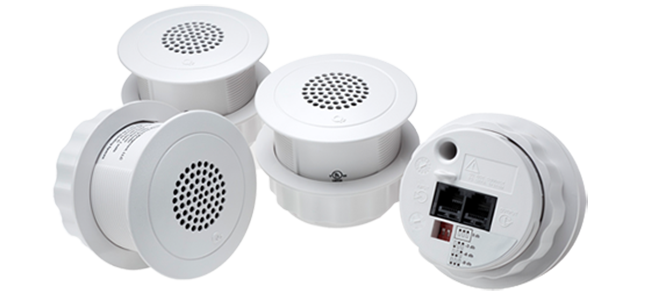
source: www.cambridgesound.com

Out of sight, out of mind.
Create a less hectic work environment, invisibly. Sound masking solutions are often installed within or above ceiling panels, making them ideal for almost any commercial space. This includes:
Offices
Conference Halls
Co-working Spaces
Libraries
Frequently Asked Questions
What is sound masking?
Sound masking is a system that introduces a soft, engineered background sound through ceiling-mounted emitters. It does not eliminate conversations. It raises the ambient noise floor so that nearby speech becomes less intelligible from a distance, improving speech privacy without physical barriers.
What is the difference between sound masking and acoustic treatment?
Sound masking covers sound by adding engineered background noise to reduce how far speech travels. Acoustic treatment absorbs sound using panels, diffusers, and soft materials to reduce echoes and reverberation. They solve different problems and work best together. A room with poor acoustics but no masking still has speech privacy issues. A room with masking but poor acoustics has limited intelligibility gains.
Do I need sound masking or acoustic panels?
It depends on your primary problem. If people can overhear conversations across the office, sound masking addresses that directly. If meetings sound echoey or voices are hard to understand in a room, acoustic panels are the right starting point. Most commercial offices benefit from both.
Where is sound masking most commonly used?
Sound masking is most effective in open-plan offices, healthcare facilities, financial services environments, call centres, and any space where speech privacy and confidentiality matter. It is less commonly used in boardrooms or classrooms, where acoustic treatment is typically the better solution.
Will sound masking make the office too noisy?
No. A properly calibrated sound masking system produces a sound similar to soft airflow, noticeable only when you listen for it. The goal is to raise the ambient noise floor just enough to mask speech, not to create a distracting environment. A qualified installer tunes the system to the specific room so the level is appropriate.
We are a commercial AV integrator with nine locations across Canada. We specialize in audio, video, conferencing, control and automation. We offer an extensive range of services including AV consultation, design, sales, installations and ongoing support.
Get in touch for more information or to request a quote today!
