Comparing Shure Wireless Systems
In the world of live sound, broadcasting, and professional audio, the importance of a reliable wireless microphone system cannot be overstated. Whether you're delivering a keynote speech, performing on stage, or recording a broadcast, the clarity of your voice and the stability of your signal is critical. Shure, a leading name in audio technology, offers a range of wireless microphone systems that cater to different needs and environments, ready for every stage, theatre, or house of worship.
While we don’t manage live events, we design and install the permanent audio infrastructure that power these environments. When the curtain rises or the microphone switches on, the system performs flawlessly, every time. With so many signal types and microphone options available, however, it can be difficult to determine which system is right for your space.
In this post, we'll break down the key differences between the various types of wireless signals these microphones use, and then dive into a detailed comparison of Shure's most popular wireless microphone systems. By the end, you'll have a clear understanding of which Shure wireless system is the best fit for your specific needs.
How Wireless Microphone Systems Work
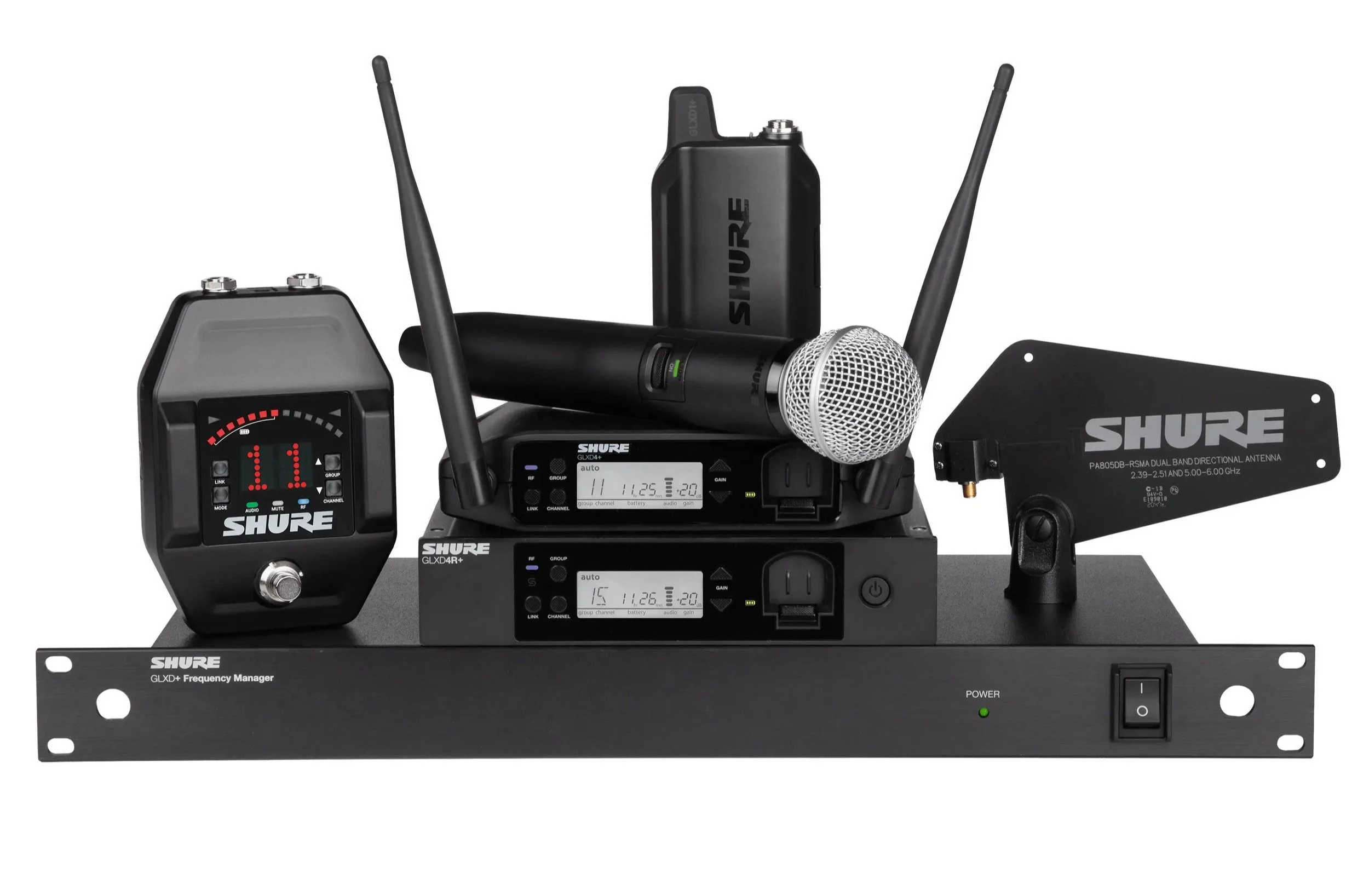
A Shure GLX-D wireless system, including the guitar pedal transmitter.
In a commercial or professional setting, wireless audio is handled by radio waves transmitting at a specific frequency range. Because these systems can transmit at long distances and potentially cause interference with important systems, radio frequencies (RF) in Canada are regulated by the federal government. There are a few different frequency ranges that can be used for wireless microphones—Ultra-high frequency (UHF), very high frequency (VHF) and 2.4/5.8GHz transmission.
Very High Frequency (VHF)
VHF signals are defined as anything from 30 megahertz (MHz) to 300 MHz. These signals are very commonly used for audio and video—FM radio is a VHF signal, as are many over-the-air TV stations. For wireless microphones, VHF can be better in scenarios where there is a lot of RF interference, but it does not have as long of a range as UHF signals, and it is more prone to interference from physical obstacles. In Canada, wireless microphones use the same VHF frequencies as over-the-air television: from 174 MHz to 216 MHz.
Ultra High Frequency (UHF)
UHF signals pick up where VHF leaves off, and is defined as anything from 300 MHz to 3 gigahertz (GHz). While there are still some frequency bands for things like television and cordless phones, much of this frequency range is used by things like air traffic control, radio astronomy, and GPS satellites. Just like the VHF system, UHF wireless microphones use the same frequencies as over-the-air TV, but with more frequencies available.
2.4/5.8GHz Systems
Most commonly used for WiFi, some Shure wireless systems use 2.4GHz radio waves to transmit audio. Because they use the same frequencies as WiFi, these systems do not require any additional permits or approval to use overseas like some UHF and VHF systems. However, because these frequencies are very commonly used by cell phones for WiFi and Bluetooth, systems using these frequencies are often a bad idea in larger rooms or crowded spaces.
The Difference Between Shure Wireless Systems
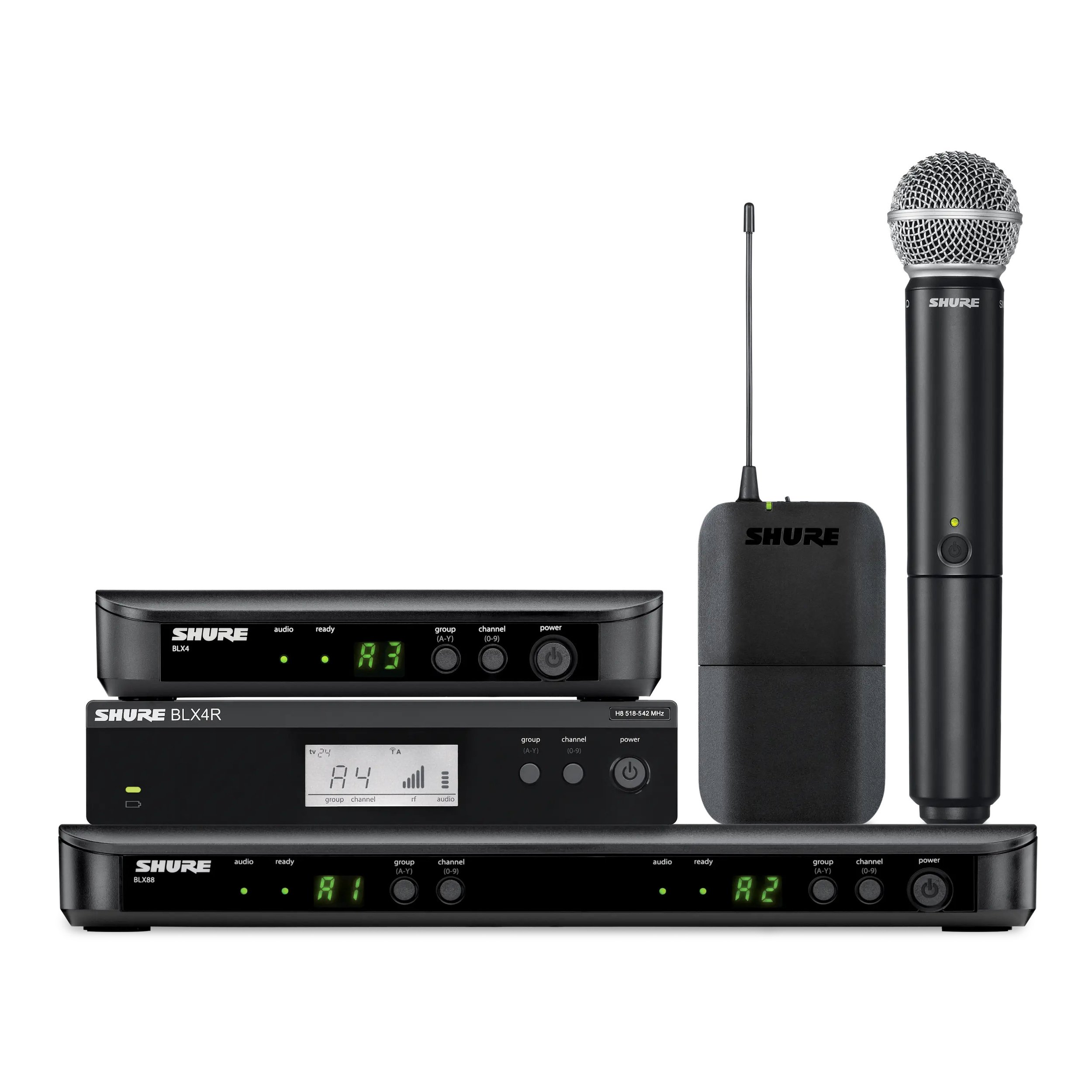
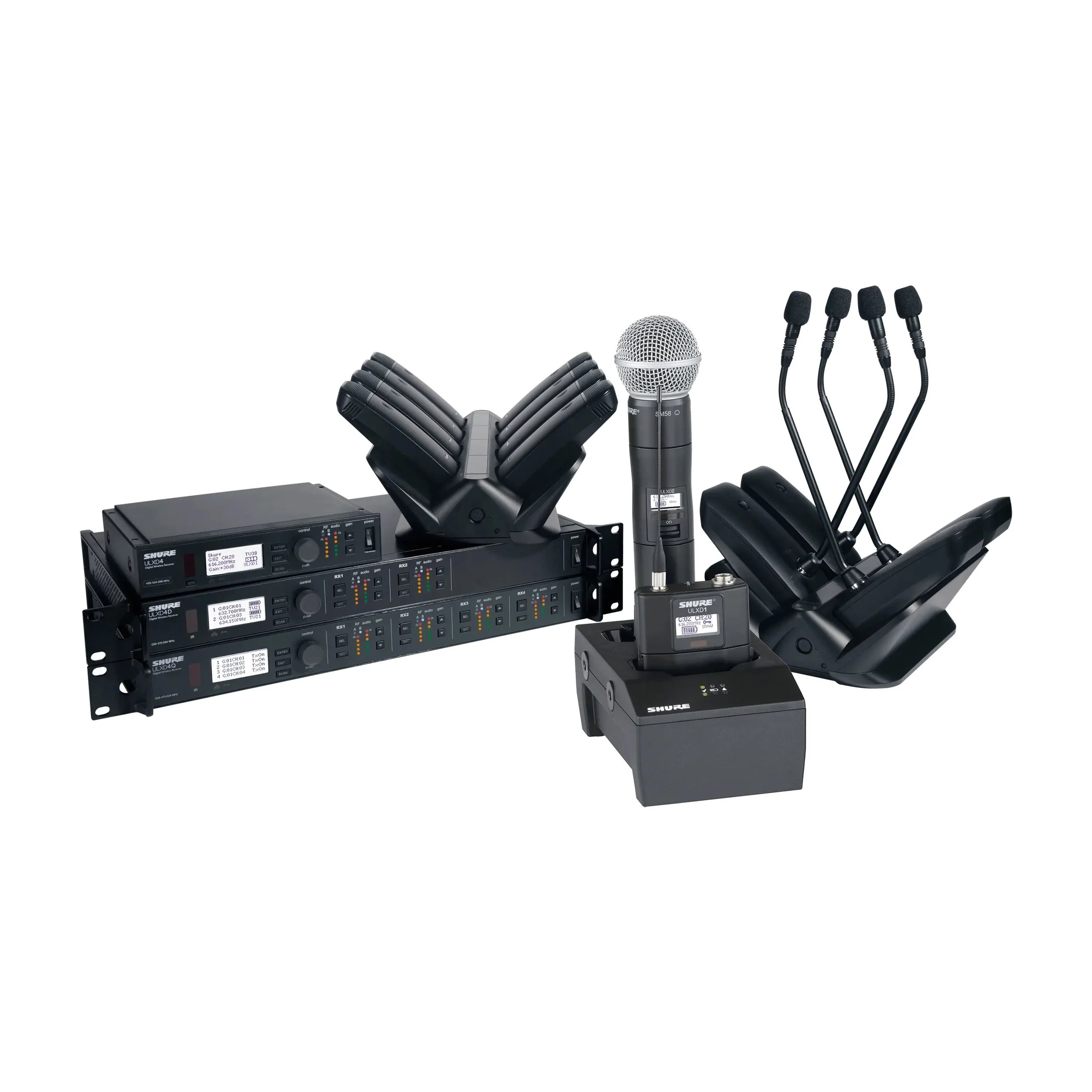
Shure manufactures a wide range of wireless microphone systems, from barebones entry-level systems to best-in-class systems designed to work in the most challenging environments. To make things easier, we’ll give you a quick breakdown of the feature set of each line of microphones, and some ideal use cases for them.
Shure BLX
The BLX system is Shure’s entry-level microphone system. It uses UHF transmission, and can operate with 12 systems working concurrently. The receivers can be bundled with handheld microphones, or a belt-pack transmitter for headset or lavalier microphones. These systems are great for churches, community halls, or small venues looking for an installed wireless solution. However, they do not offer any receiver networking, making it difficult to manage which channels are in use in a larger system.
GLX-D
The GLX-D system uses 2.4/5.8GHz transmission instead of UHF or VHF radio spectrum. The GLX-D series has been designed for touring musicians, with a small form factor, global frequency compatibility, and rechargeable batteries. However, it only supports 4 systems per frequency band. These systems work best for musicians who want to bring wireless microphones and/or guitar into their performances.
SLX-D+
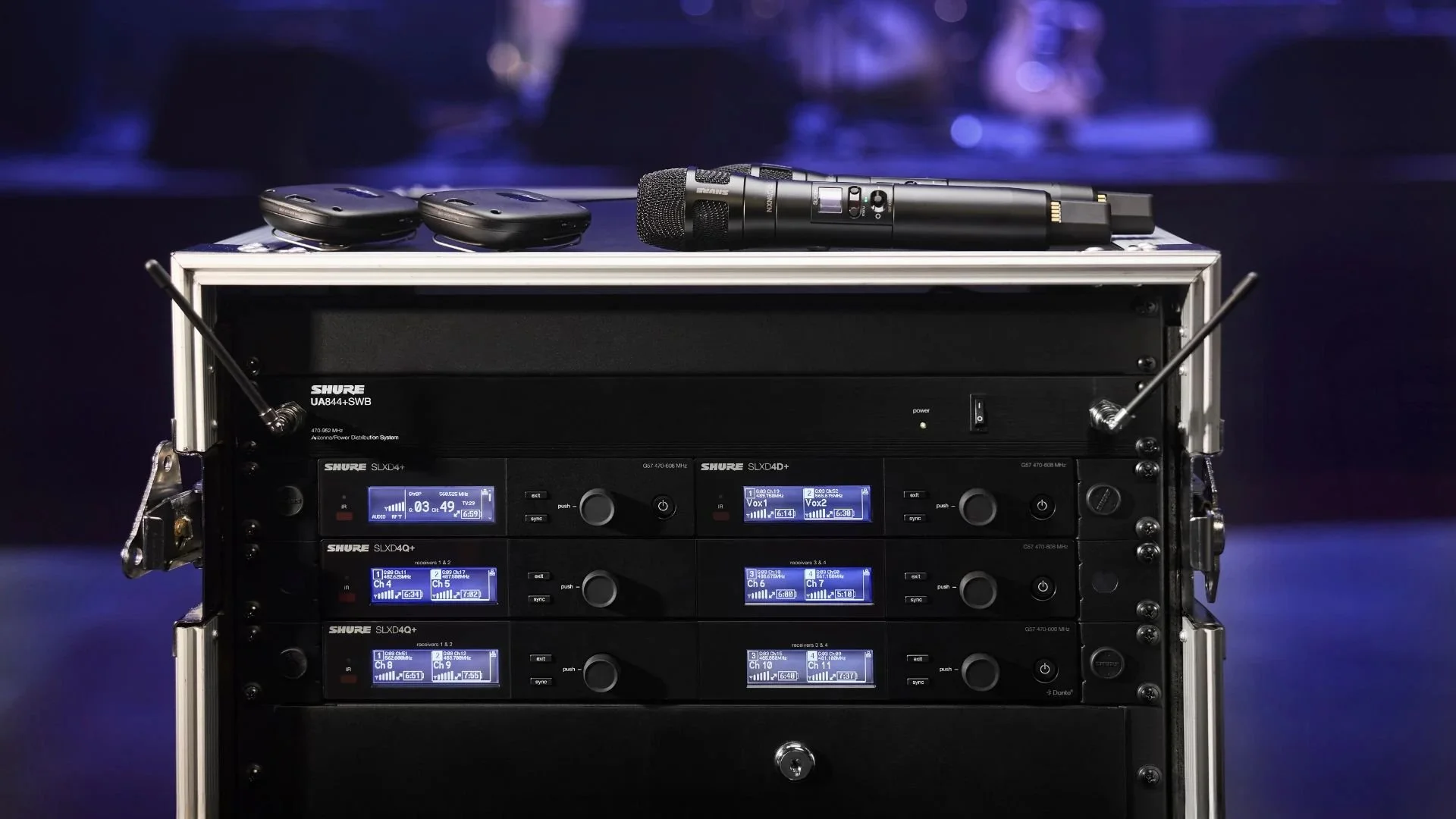
An all-purpose workhouse, the new SLX-D+ Wireless System maintains stable signals from an expanded frequency range of 138MHz - offering compatible channels up to 11 per 6Mhz and 14 per 8MHz TV bands. The SLX-D+ system features a variety of different mic options as well as fully portable transmitter / receiver pairing for content creators and videographers. For most small to medium-sized venues, or anything portable, the SLX-D+ provides a fantastic balance of cost-effectiveness and performance.
QLX-D
The QLX-D series takes the feature set of SLX-D+ and brings in some features that make it especially suitable for corporate and enterprise uses. The transmitters and recievers use 256-bit encryption, ensuring that all your communications are private. The QLX series also features more varieties of microphones, including boundary and gooseneck microphones for boardrooms or training rooms.
ULX-D
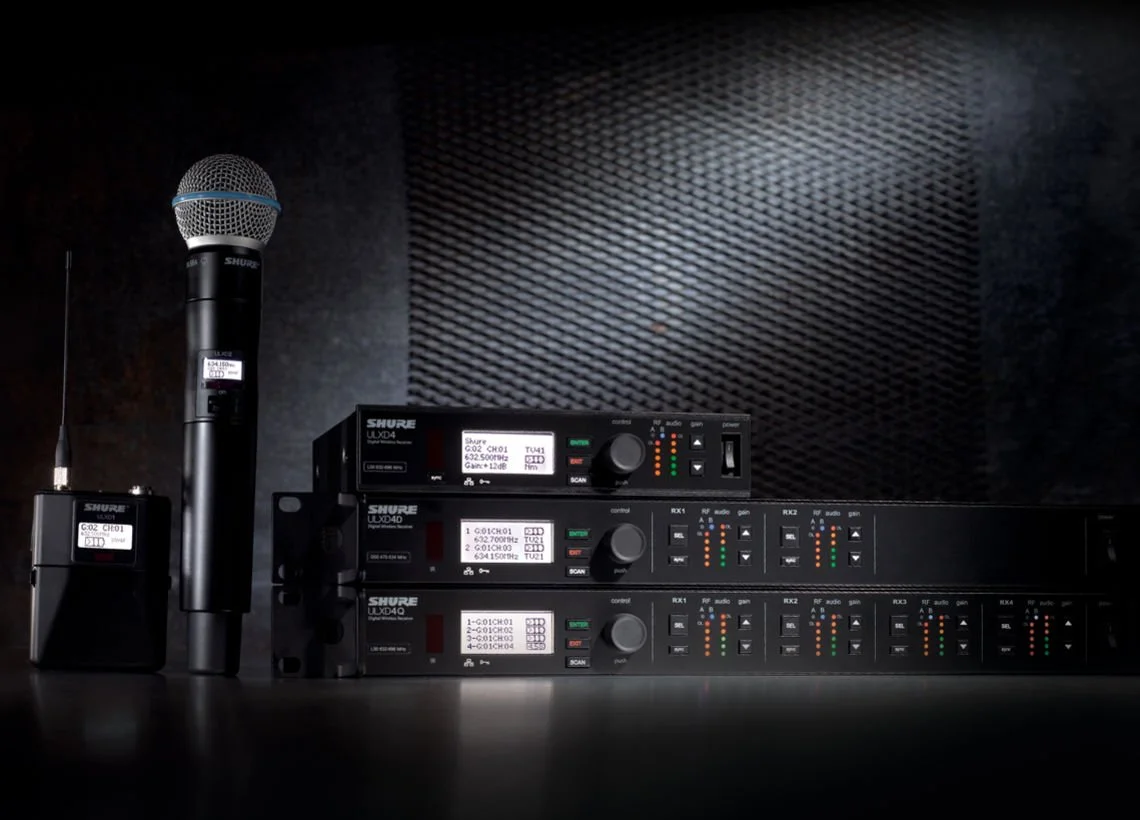
The ULX-D line is designed to take full advantage of modern AV over IP technologies. Unlike the QLX-D series, the ULX systems can be configured as a single, dual, or quad receiver, some of which can transmit audio using Dante. For large venues using networked stage boxes and consoles, this reduces the amount of cabling required and can simplify touring rigs.
Axient
The Axient wireless system is Shure’s flagship wireless product, designed to handle all the problems modern production can throw at it. Up to 116 systems can be run simultaneously, perfect for music festivals or conference centers that may have multiple events interfering with each other. The Axient system also features Quadversity, which allows 4 antennas to be used simultaneously, dramatically increasing coverage for situations like stadiums or venues where line of sight to the antenna may be broken.
Selecting a Microphone System
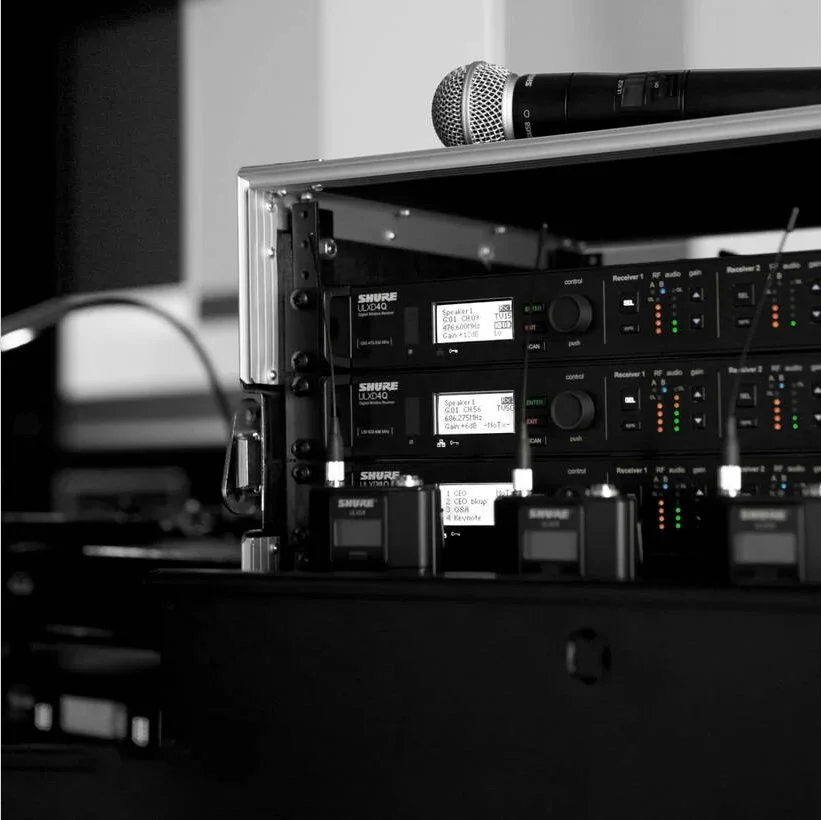
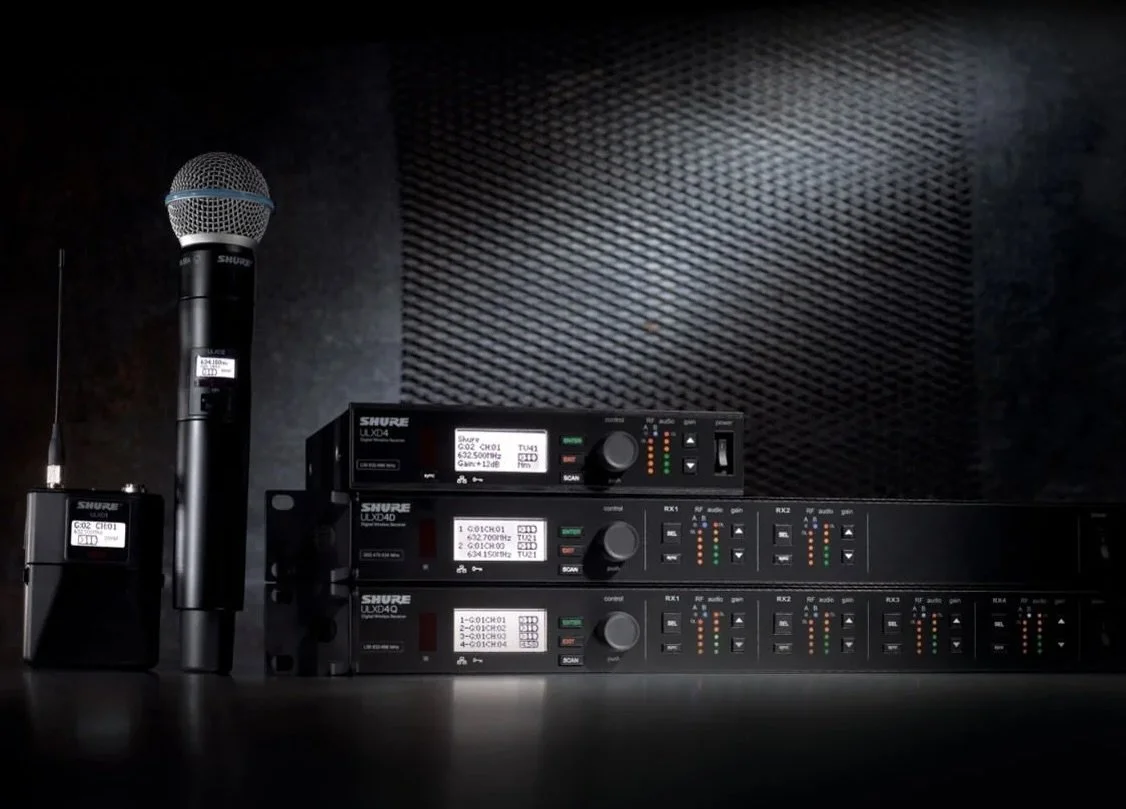
Rack-mounted ULX-D Quad Receivers and rechargeable wireless microphone transmitters.
SLX-D+ vs QLX-D: Professional
The SLX-D+ and QLX-D systems both operate on the UHF spectrum, but they cater to slightly different professional needs. The SLX-D+ is a versatile and cost-effective system that supports up to 32 systems per frequency band, making it well-suited for small to medium-sized venues or portable setups. It offers a variety of microphone and receiver options, including a fully portable receiver, and is a reliable workhorse for general-purpose use. In contrast, the QLX-D builds on the SLX-D+’s features by adding 256-bit encryption, making it particularly valuable in corporate and enterprise environments where secure communication is paramount. Additionally, the QLX-D offers a broader range of microphone options, including specialized models like boundary and gooseneck microphones, which are ideal for boardrooms and training rooms.
ULX-D vs Axient: Large Venue
Both the ULX-D and Axient systems have features that allow them to excel in large venues. The main advantage the Axient system has over ULX-D is the ability to work in situations with lots of interference or bad reception. The Axient system also features a smaller format reciever, making it easier to use for touring rigs.
In Conclusion
Shure’s wireless microphone systems offer a range of solutions tailored to different needs, from the budget-friendly BLX system ideal for small venues, to the feature-rich Axient system designed for the most demanding professional environments. Whether you’re a musician looking for a portable, global solution like the GLX-D, a venue manager needing a reliable, versatile system like the SLX-D+, or a corporate user requiring secure, encrypted communication with the QLX-D, Shure has a system that fits your needs. For large-scale productions and events, the ULX-D and Axient systems provide unparalleled performance and flexibility, ensuring flawless operation even in complex, challenging environments.
Choosing the right system is crucial for ensuring the best performance and reliability for your specific application. If you’re ready to invest in a Shure wireless microphone system or need help deciding which system is best for your needs, contact us today to request a quote and take the first step toward elevating your audio experience.