
From Chaos to Calm: How Acoustic Panels Improve Any Space
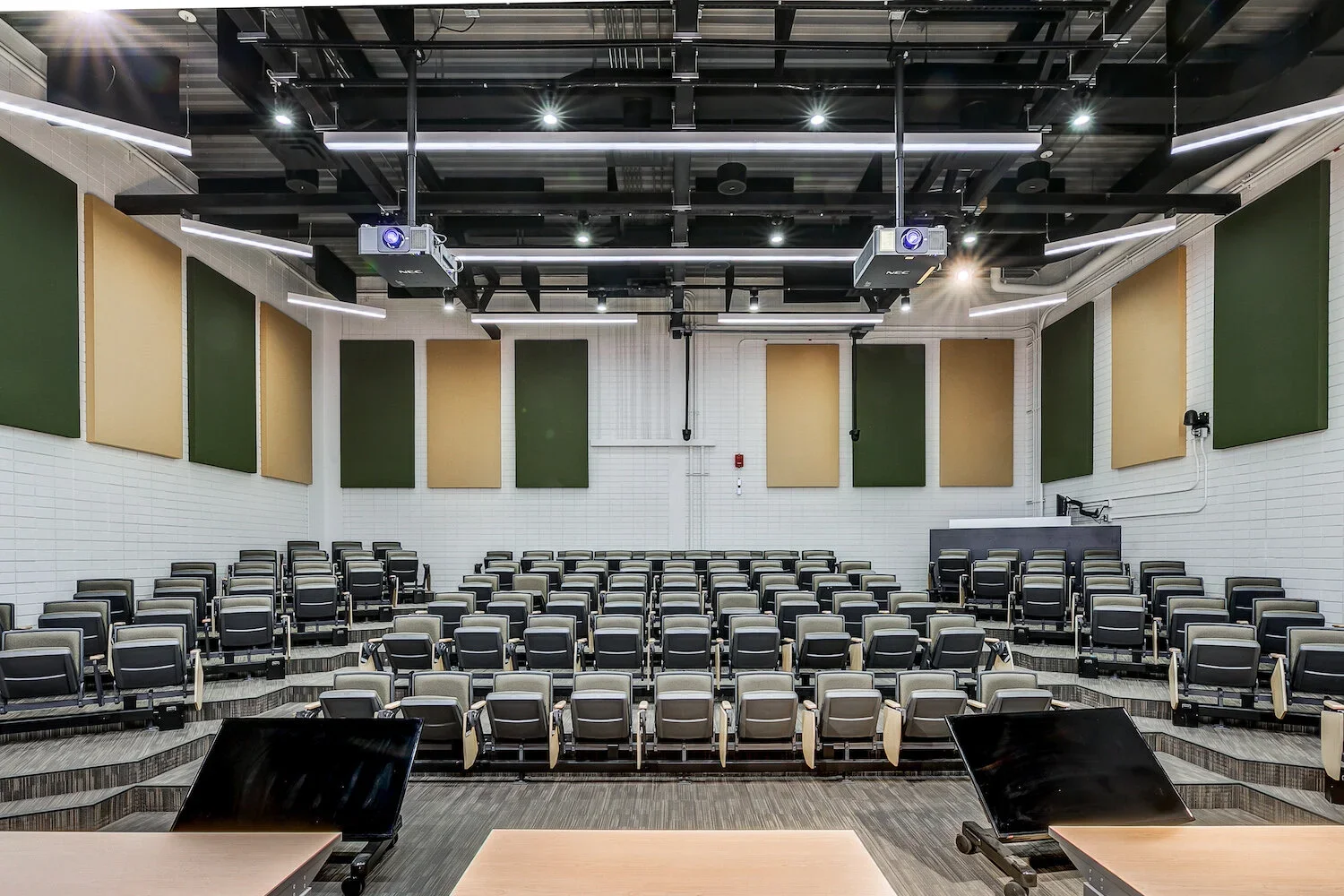
Have you ever walked into a room that looked beautiful but sounded chaotic? Conversations overlap, voices echo, and it becomes harder to focus the longer you stay. Many offices, schools, and hospitality spaces are designed with hard, reflective materials that unintentionally amplify noise. The result is a space that feels louder, more stressful, and less effective than it should be. Even the most advanced microphones, speakers, and video conferencing systems can’t overcome excessive echo and reverberation. To truly optimize performance and user experience, sound must be managed at the source, starting with the room itself.
Sound waves easily bounce off hard, smooth surfaces such as glass, brick, tile, and hardwood floors. Each bounce creates an echo that multiplies and blends together, creating a buildup of sound called reverberation. In excess, it can interfere and distort everyday sounds, making it harder to hear clearly and concentrate.
While there are some short-term solutions to mitigate the noise, like noise-canceling headphones and rearranging furniture, stopping the sound waves in their tracks is the best, long-term solution. Acoustic panels are designed to absorb sound waves on contact, trapping echoes before they can reverberate.
What Are Acoustic Panels?
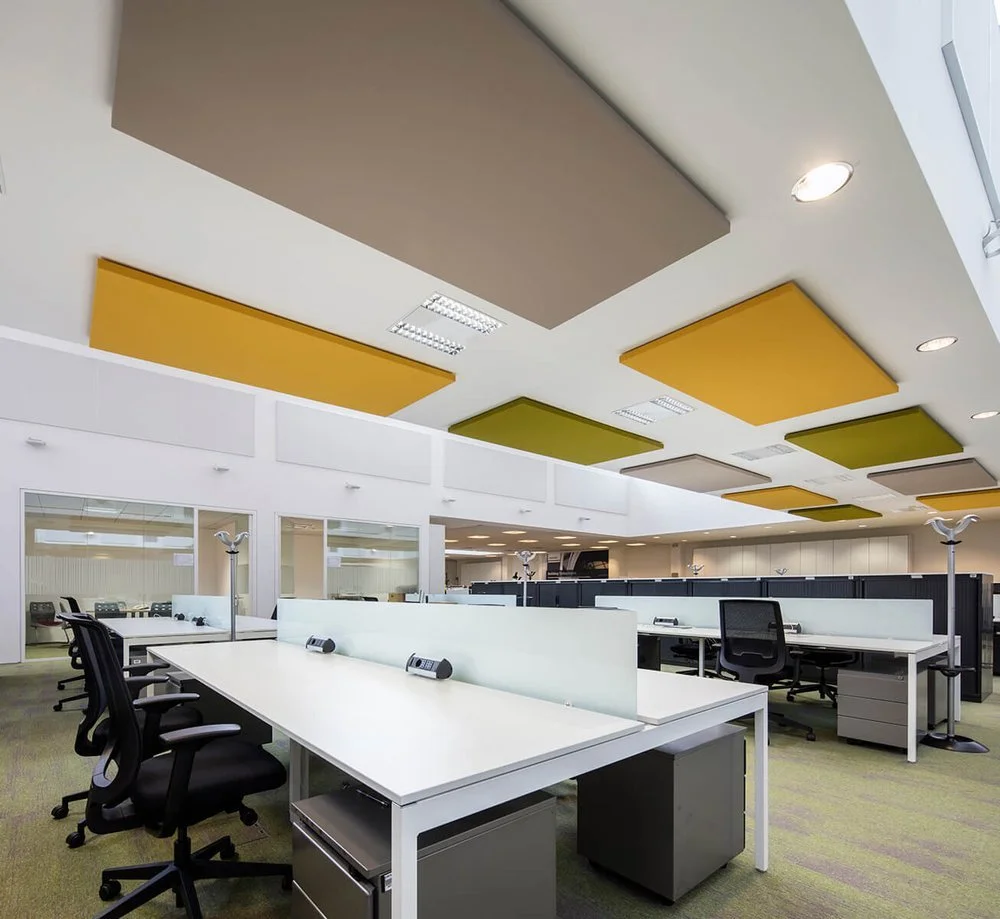
Acoustic panels are decorative, soft-furnished panels that are strategically placed within interior rooms that improve the soundscape and facilitate clear communication. By absorbing echoes at the first point of reflection, they eliminate excess reverberation, reducing unwanted background noise.
These fully customizable, cost-effective solutions are designed either to make a bold statement or seamlessly blend into their surroundings. Aesthetic possibilities are endless, as they can be made from a wide range of materials from fabric and foam to cork and moss, and installed either on the wall or ceiling.
For those looking to go beyond solid colours, some companies, like Acoustic Panels Canada, offer custom-printed panels featuring photography or artwork. This transforms a functional acoustic treatment into a striking design element, while a lightweight frame and semi-rigid stone wool core ensure the panels maintain excellent sound absorption performance.
Acoustic panels are used in all sorts of spaces, from boardrooms, co-working setups, lecture halls, and restaurants. Although very different, each environment experiences the same valuable benefits the solution delivers, mitigated background noise and reduced reverberation and echo.
Customizing Acoustics for Any Space
Sound should support an environment, not disrupt it. Designing an effective acoustic soundscape starts with a clear understanding that every space serves a different purpose. The most successful noise-control strategies are tailored to the functional needs of each environment.
· Healthcare: Acoustic panels promote speech privacy, dampen stress-inducing noise, and support a calm, healing atmosphere for patients and staff.
· Offices: Acoustic solutions minimize distractions, improve speech intelligibility in boardrooms, and enhance focus and productivity in open-plan workspaces.
· Schools: Proper sound control improves sound quality and reduces noise in classrooms, hallways, libraries, and auditoriums, strengthens teacher-to-student communication, and supports concentration and overall academic performance.
· Hospitality: In hotels, restaurants, and lounges, acoustics create comfortable, inviting atmospheres by managing background noise and improving conversation clarity.
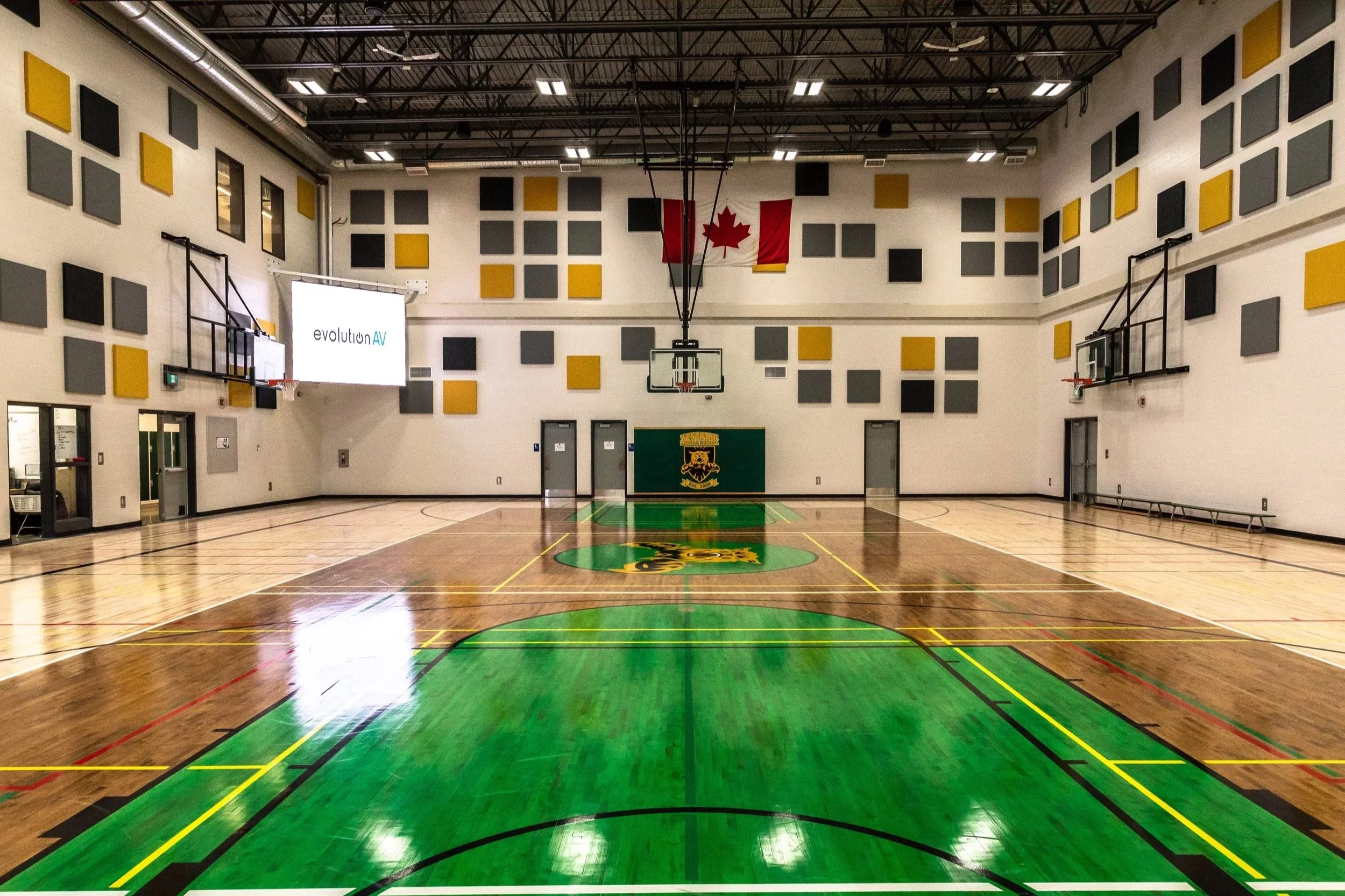
· Gyms and Fitness Centre's: Panels control high noise levels from music, equipment, and group classes, creating a more comfortable and motivating environment.
· Studios: Strategic placement fine-tunes sound quality, controls reverberation, and ensures clarity for recording, broadcasting, or creative production.
By customizing materials, placement, and performance levels to match how each space is used, acoustic solutions go beyond noise reduction to enhance comfort, productivity, learning, and the overall experience.
Did you know? Chronic noise exposure has been linked to a multitude of health problems. Through an abundance of evidence and studies about the negative impact of excessive noise, the United Nations listed noise pollution as a top environmental and health threat in a 2022 report.
Conclusion
Noise may be invisible, but its impact is powerful. From offices and classrooms to restaurants, healthcare facilities, and fitness centers, the way a space sounds directly affects how people feel, focus, communicate, and perform. While technology continues to evolve and integrate into our environments, it can only function at its best when supported by thoughtful acoustic design.
AV technology isn't always about massive displays or over-the-top sound systems. The goal above everything else is to provide solutions that improve efficiency and the end-user experience. Acoustic panels may not be the first thing that comes to mind when thinking about AV, but the benefits they provide are undeniable.
Imagine a space where every word is clear, every meeting runs smoothly, and every environment feels calm and controlled. Acoustic panels make that possible. Want to know how thoughtful acoustic design can change your space?
Request a Quote to start the conversation!