Can You Use a Projector in a Bright Boardroom?
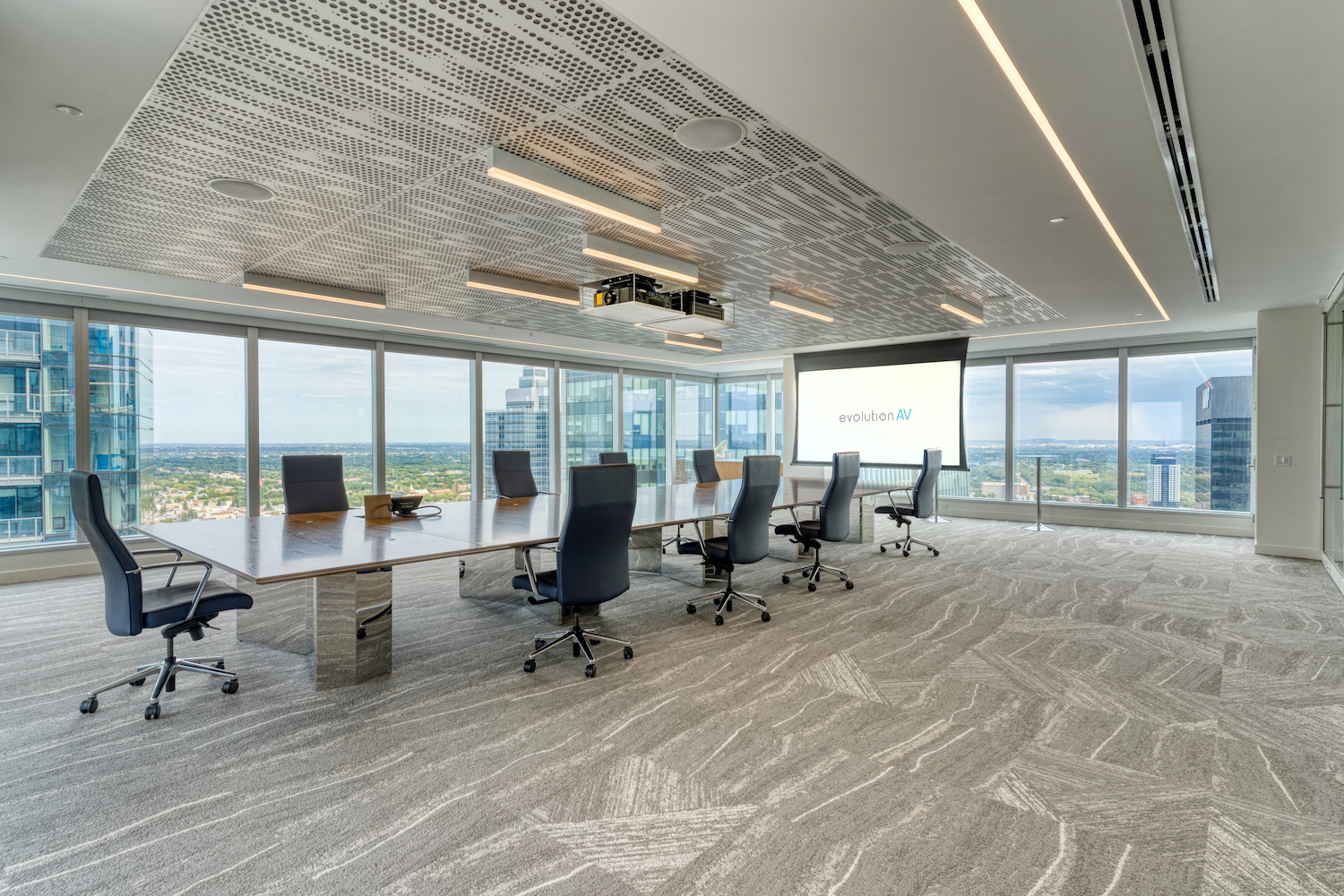
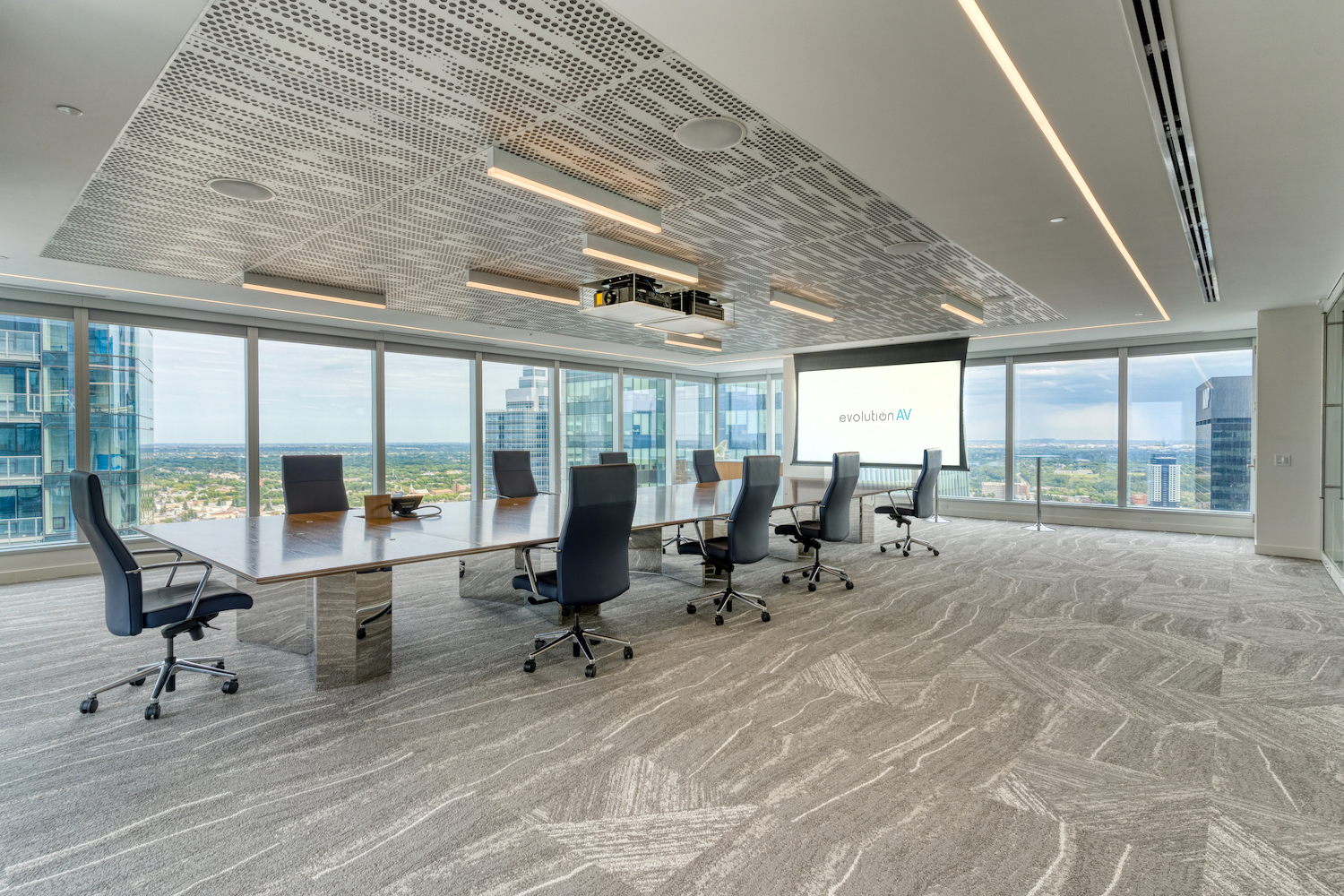
Projectors have traditionally been associated with darkened rooms, closed curtains, and dimmed lights. That isn’t always possible in corporate meeting rooms as modern designs and architectural trends lean towards large, bright, open spaces.
Commercial projection systems can work in rooms with natural and artificial lighting. The challenge is maintaining a bright, clear image that remains easy to read throughout a presentation. Choosing the right system involves looking at a projector's lumen rating, screen size, ambient light, projection screen material, and installation.
Understanding these factors can help determine whether projection is the right fit for a bright boardroom and what is needed to make it work.
What are Lumens?
Lumens determine the brightness level of a projectors light source.
Two common standards used to measure projector brightness are ANSI lumens and ISO lumens. Both use standardized testing methods, but they have different procedures and requirements.
American National Standards Institute (ANSI) lumens calculate brightness by measuring light output across a 9-point grid on a screen under controlled conditions.
International Organization for Standardization (ISO) is a newer standard that also uses a multi-zone grid but takes into account color temperature and white balance.
Neither rating is automatically better than the other. When looking at different projectors, it's important to compare ANSI ratings with ANSI ratings and ISO ratings with ISO ratings. The problem is that when the product is labeled "lumen" without specifying what kind or how it is measured.
Which Projector Is Best for a Bright Room?
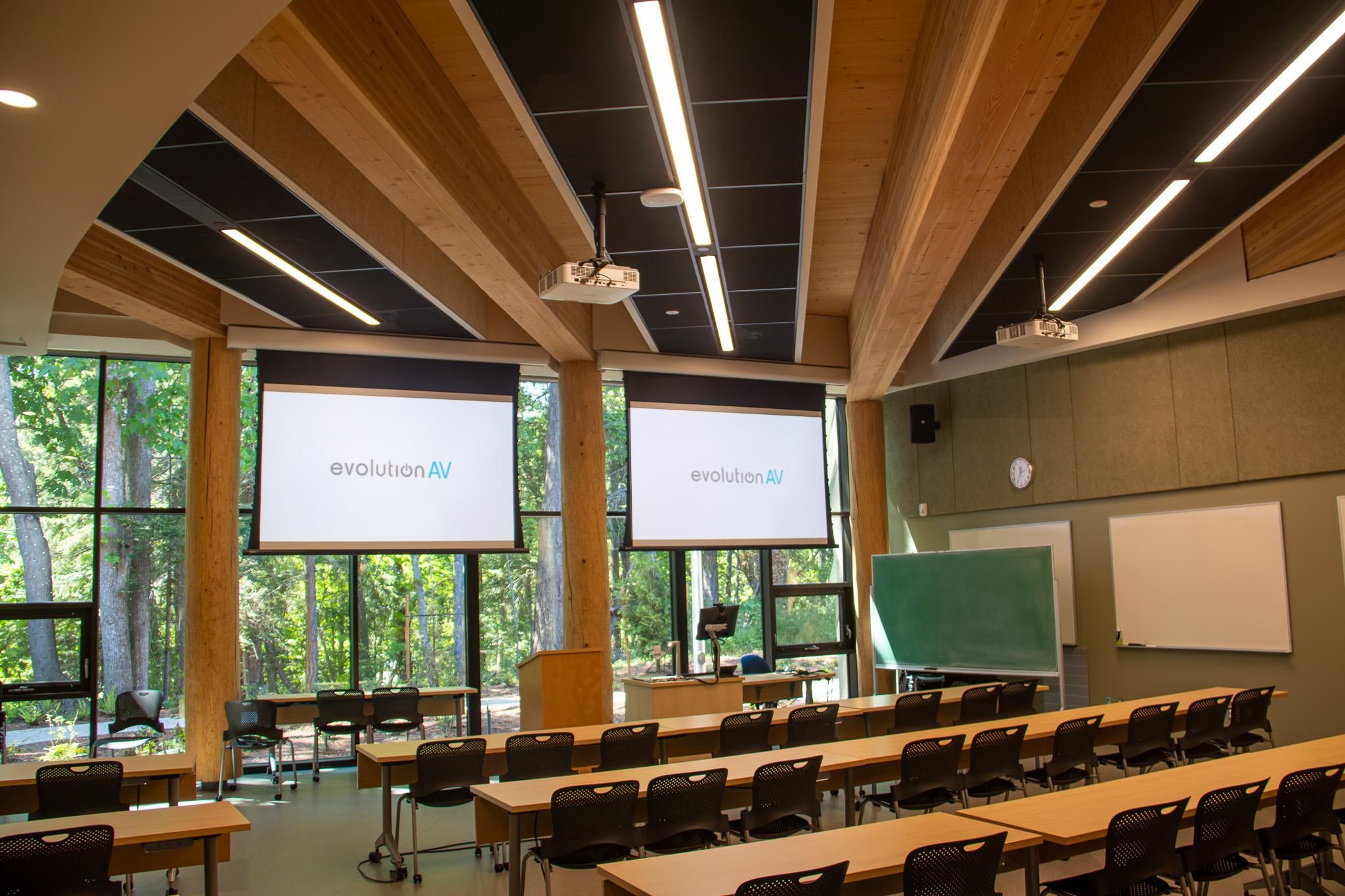
In general, higher lumen ratings help a projector produce a more visible image in a room with bright ambient light. That brightness is influenced by the projector's light source, design, and overall specifications.
Commercial projectors typically use one of three types of light sources: lamp, LED, and laser.
Traditional lamp projectors offer a range of brightness levels suitable for various meeting rooms. However, they become dimmer over time and need occasional lamp replacements, usually lasting roughly 2,000-5,000 hours depending on the model and the operating mode.
Lamp-free projectors, like LED and laser, have much longer lifespans, often lasting for more than 20,000 hours before dimming. That’s approximately 11 years if used for 5 hours a day.
LED projectors use light-emitting diodes and typically offer long operating life with minimal light-source maintenance. Many models prioritize compact size and energy efficiency, but the brightness varies. Lower lumen output projectors are better suited for smaller or darker spaces.
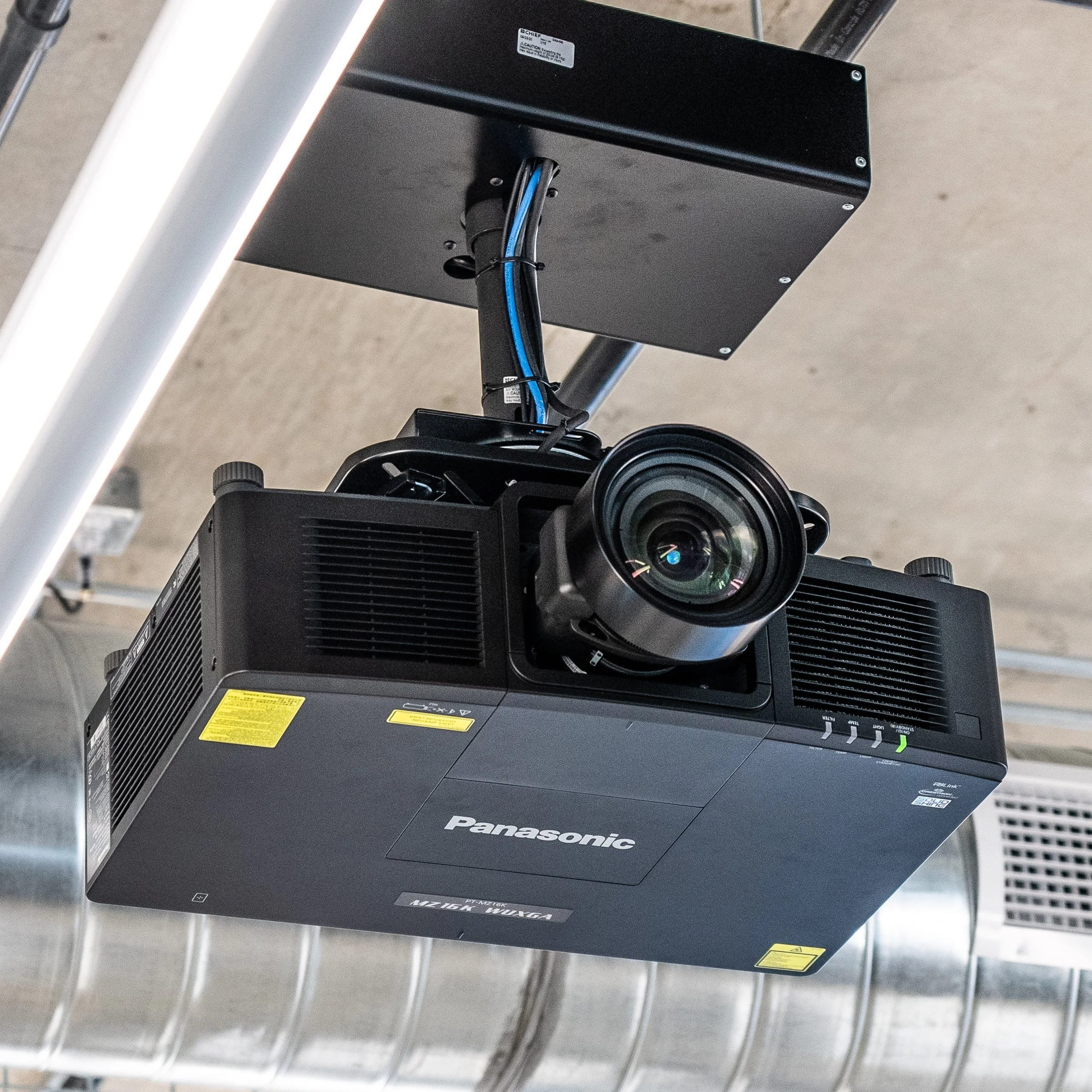
Laser projectors can be significantly brighter, with some ranging upwards of 10,000+ lumens. That makes them more than capable of handling sunlit rooms, overhead fluorescent lighting, and large images.
Laser technology doesn't automatically mean a projector is brighter than every lamp or LED model. The appropriate brightness depends on the specific projector and the requirements of the room.
Even with a high-output projector, other factors affect how bright the image appears to the audience.
Factors Affecting Projector Brightness
Ambient Light
The amount of natural and artificial light in a room affects projected image quality. Sunlight entering through windows, overhead lighting, and reflections from smooth surfaces can cause glare, reduce contrast, and make the image appear washed out.
In brighter environments, a high lumens projector can help keep the image clear.
Screen Size
Screen size influences how bright the projected image appears. A projector spreads light across the entire screen, meaning a smaller screen has a higher concentration of light than a larger screen.
For example, a projector that produces a bright image on a 100-inch screen becomes significantly dimmer when used with a 150-inch screen under the same conditions. Larger screens typically require projectors with higher lumens to maintain a clear and vibrant image.
Room Size and Viewing Distance
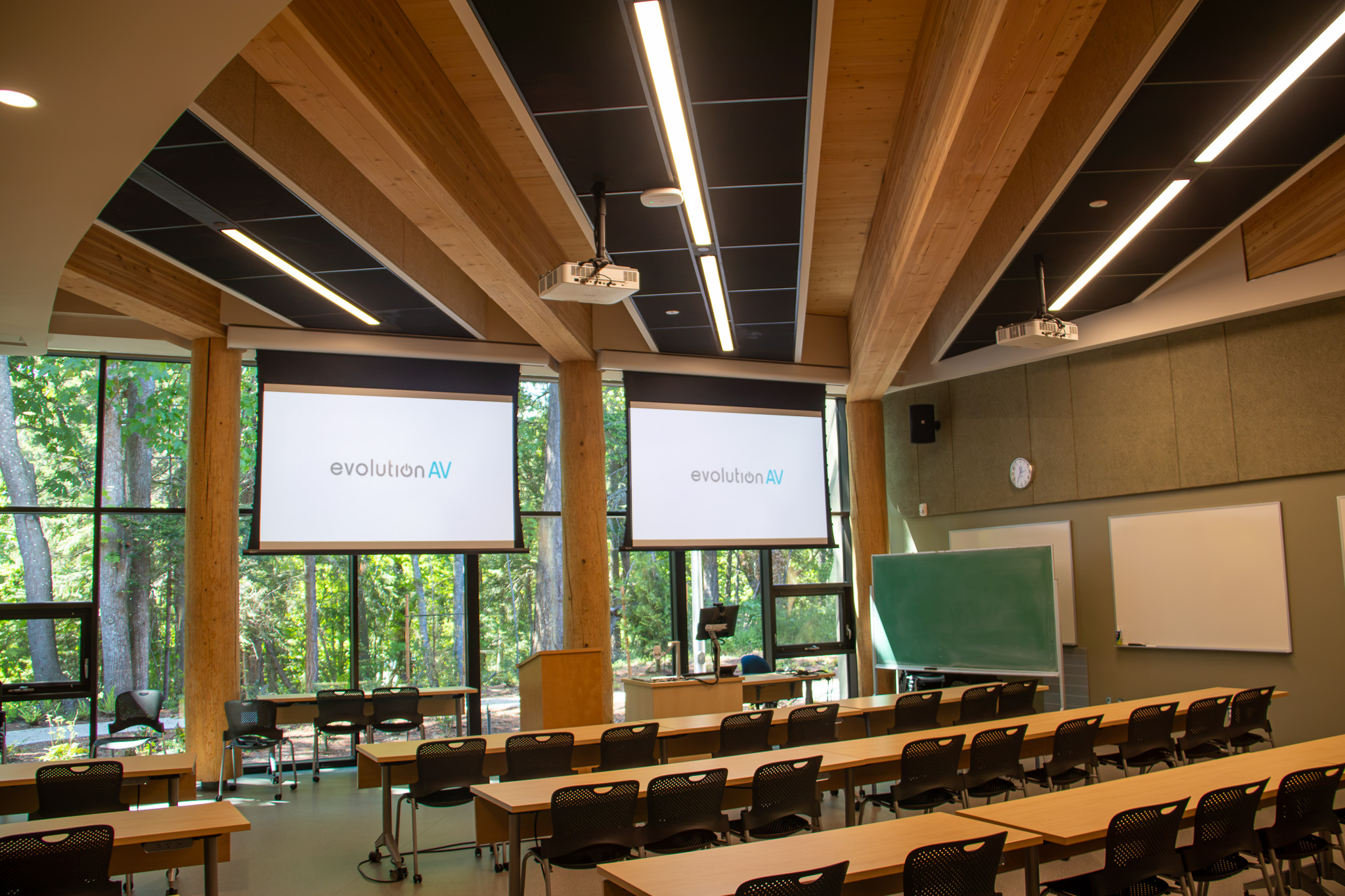
Room dimensions and seating arrangements influence how a projection system should be designed. Larger rooms often need a brighter projector to keep the image evenly lit and easy to see from every seat.
Projector placement is also important. The distance between the projector and screen, along with the lens and zoom settings, determines the image size the projector can produce.
What is an Ambient Light Rejecting Screen?
Screen material influences how projected light is reflected toward the audience. An ambient light rejecting (ALR) screen might help.
Standard matte-white screens reflect projected light across a broad area, but they also reflect ambient light that reaches the screen. This can reduce image contrast in bright environments.
ALR screens use specialized optical structures to direct projected light toward the intended viewing area while rejecting some incoming ambient light. This can help with the image contrast and make content easier to see without completely darkening the room.
This can be useful in certain meeting rooms, however ALR screens are not a universal fix for bright rooms. Their effectiveness depends on the direction of the ambient light, the projector's mounting position, the screen's optical design, and the audience's viewing angles.
Some screen materials are designed for specific projector configurations, including ultra-short-throw systems. Choosing an incompatible screen can reduce performance rather than improve it.
Choosing Projection for a Bright Boardroom
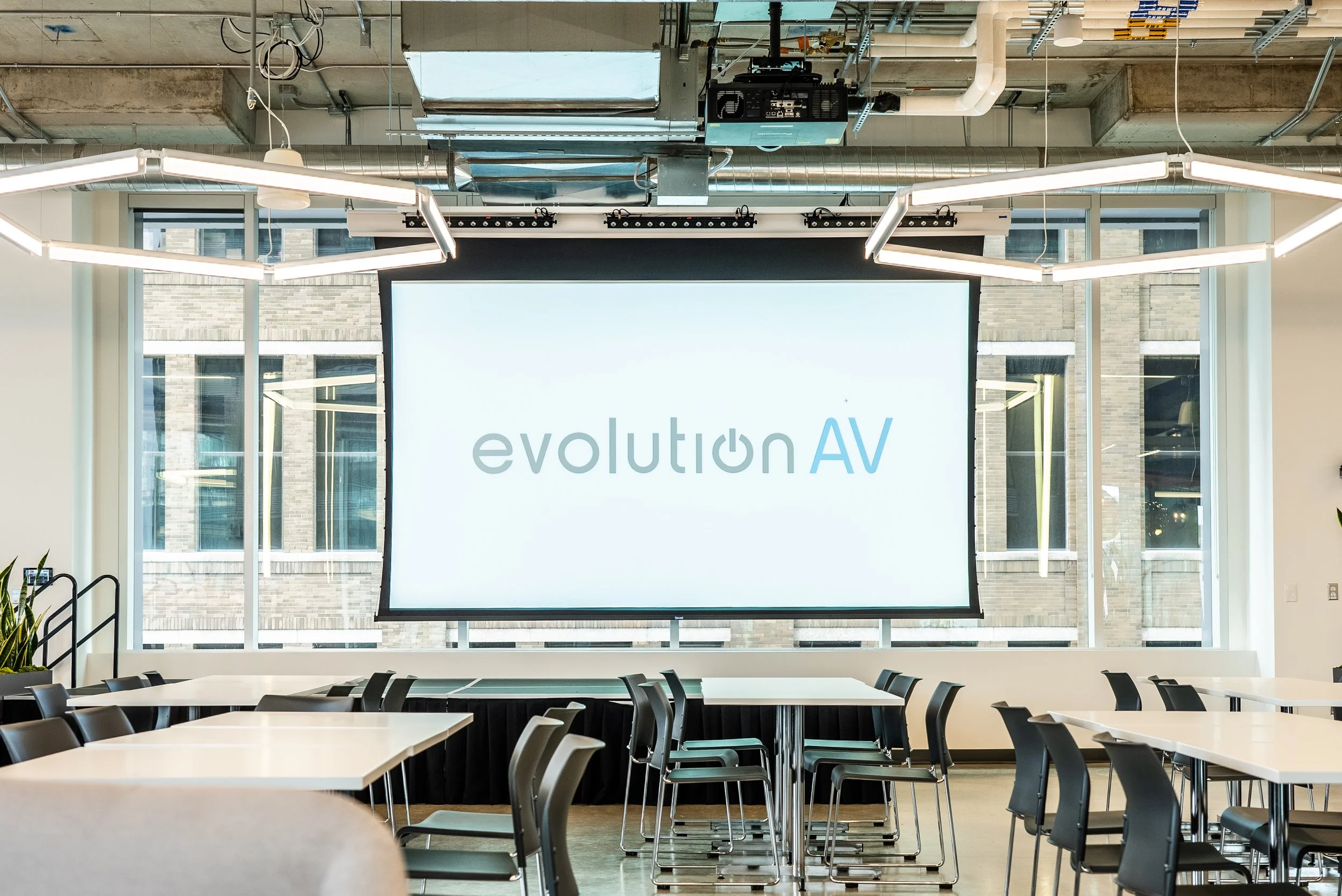
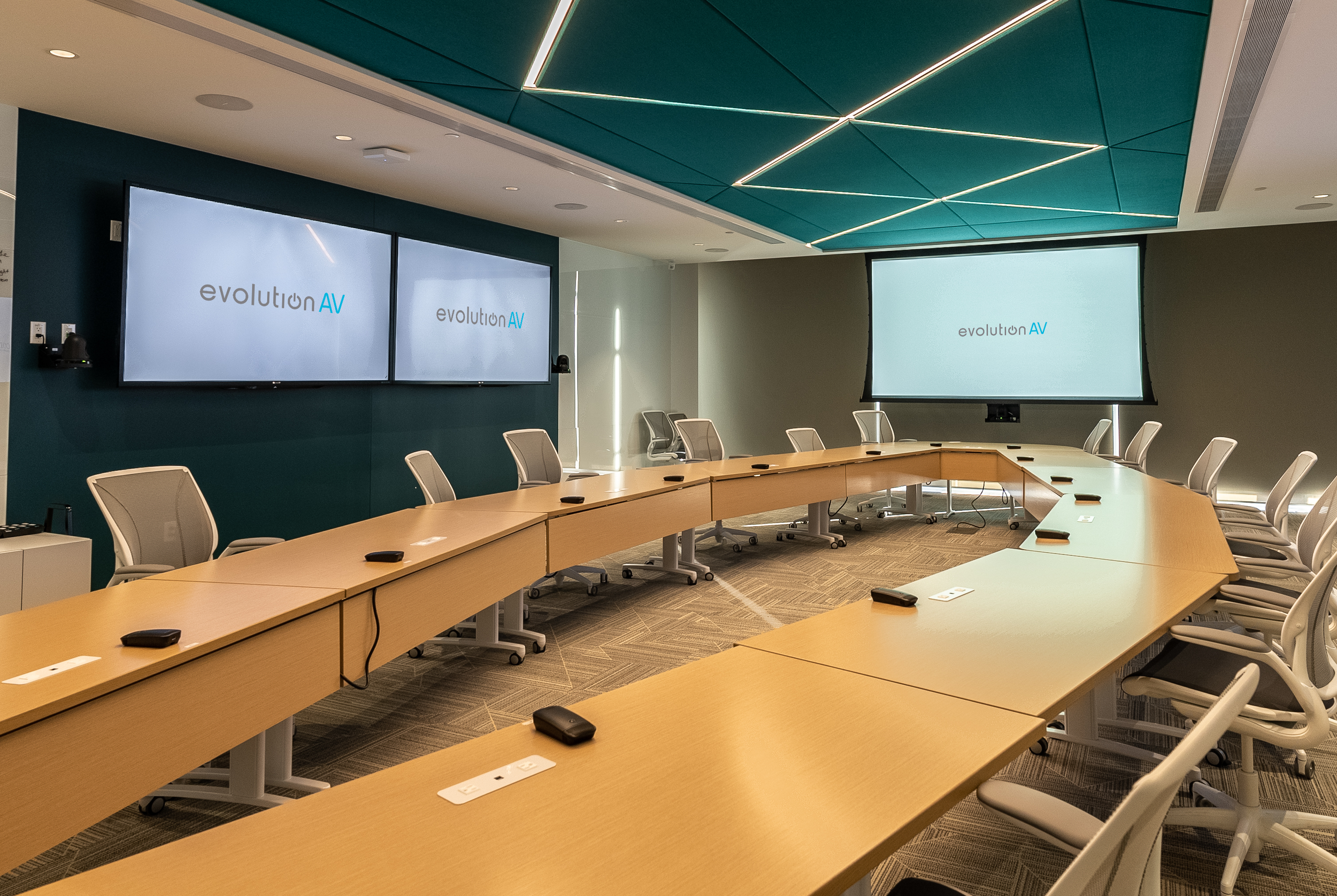
A bright boardroom doesn't automatically rule out projection. With the right combination of projector brightness, screen material, image size, and viewing conditions, a projection system can deliver clear content in many commercial environments.
Choosing the right projection system starts with understanding the room. Picking something based on lumens alone can overlook the factors that ultimately determine whether participants can see the screen comfortably.
From projector brightness and screen selection to ambient light and installation requirements, Evolution AV can help identify the right solution for your boardroom. Connect with an Evolution AV expert to discuss your space and find a display solution that delivers a clear, reliable image in your meeting environment.

FAQ
-
The required brightness depends on the amount of ambient light, screen size, and type of content being displayed. A larger screen or a room with significant daylight will generally require more projector light output. The best approach is to assess the room's lighting conditions and screen requirements before selecting a projector.
-
Yes. A projector can work in a room with large windows, but sunlight can reduce image contrast and make content harder to read. A higher-output projector, an appropriate projection screen, and window coverings or lighting controls can help improve visibility. If daylight cannot be controlled, a commercial display may be a better option.
-
Laser projectors are available in high-brightness models suited to commercial environments, including large boardrooms. They also typically offer long light-source life and reduced routine maintenance compared with traditional lamp-based projectors. However, brightness varies by model, so the projector's specifications and the room's requirements should guide the decision.
-
An ALR screen is designed to reflect projected light toward the viewing area while rejecting some ambient light. In suitable conditions, it can help preserve image contrast in bright rooms. Performance depends on the screen's optical design, projector placement, lighting direction, and audience viewing angles.
-
Generally, yes. As the projected image gets larger, the projector's light is spread across a greater area, reducing the light per unit of screen area. A higher-output projector may be needed to maintain the desired image brightness on a larger screen, especially in rooms with ambient light.
-
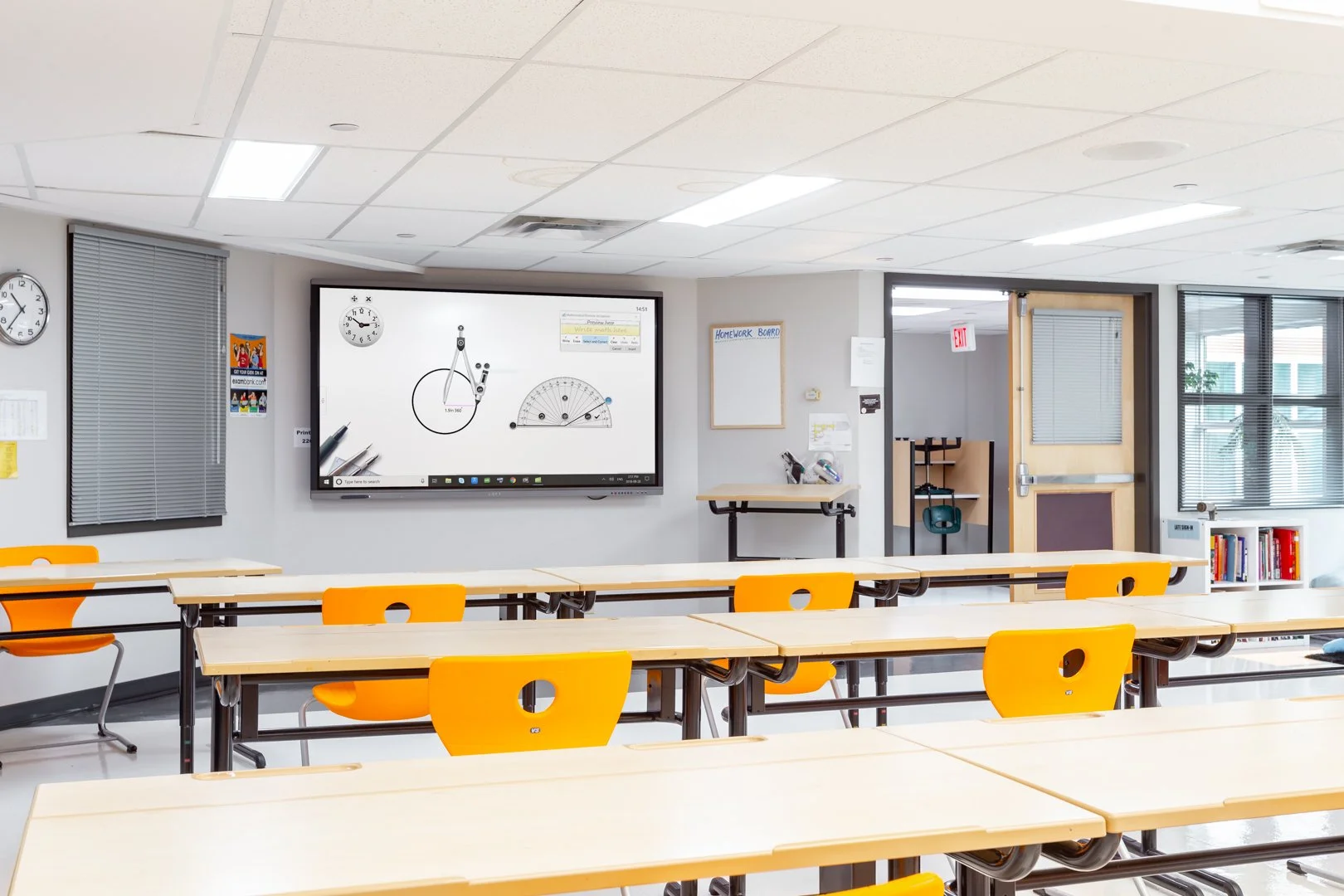
It depends on the room and how it is used. Projection can be a good choice when a large image is required, while commercial displays typically offer a bright, consistent image in rooms with substantial daylight. Screen size, viewing distance, lighting conditions, installation requirements, and budget should all be considered when choosing between the two.