InfoComm 2026 Recap: The Biggest Digital Display Announcements You Should Know About
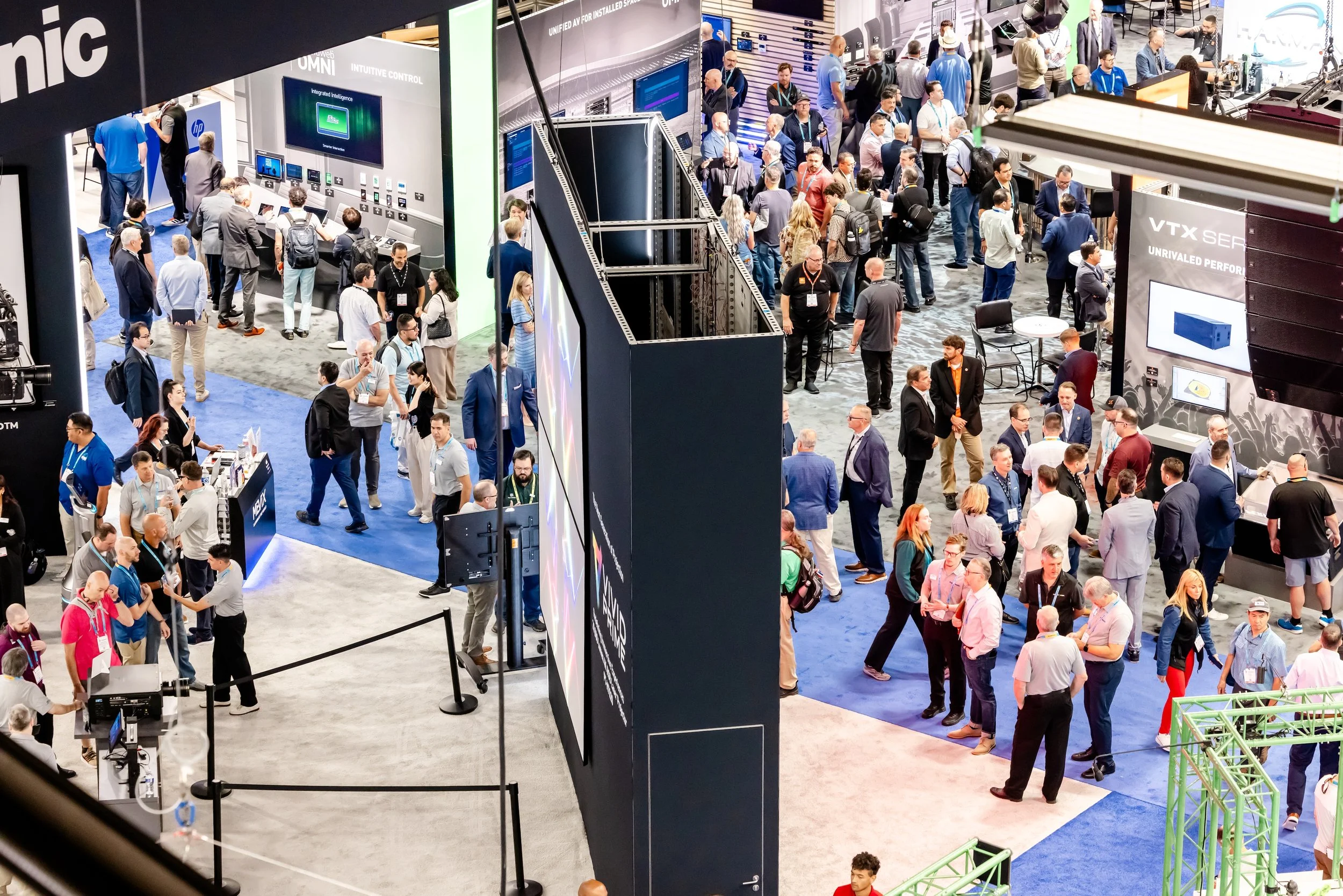
Panasonic InfoComm 2026 Booth - Photo taken by Lotus Eyes Photography
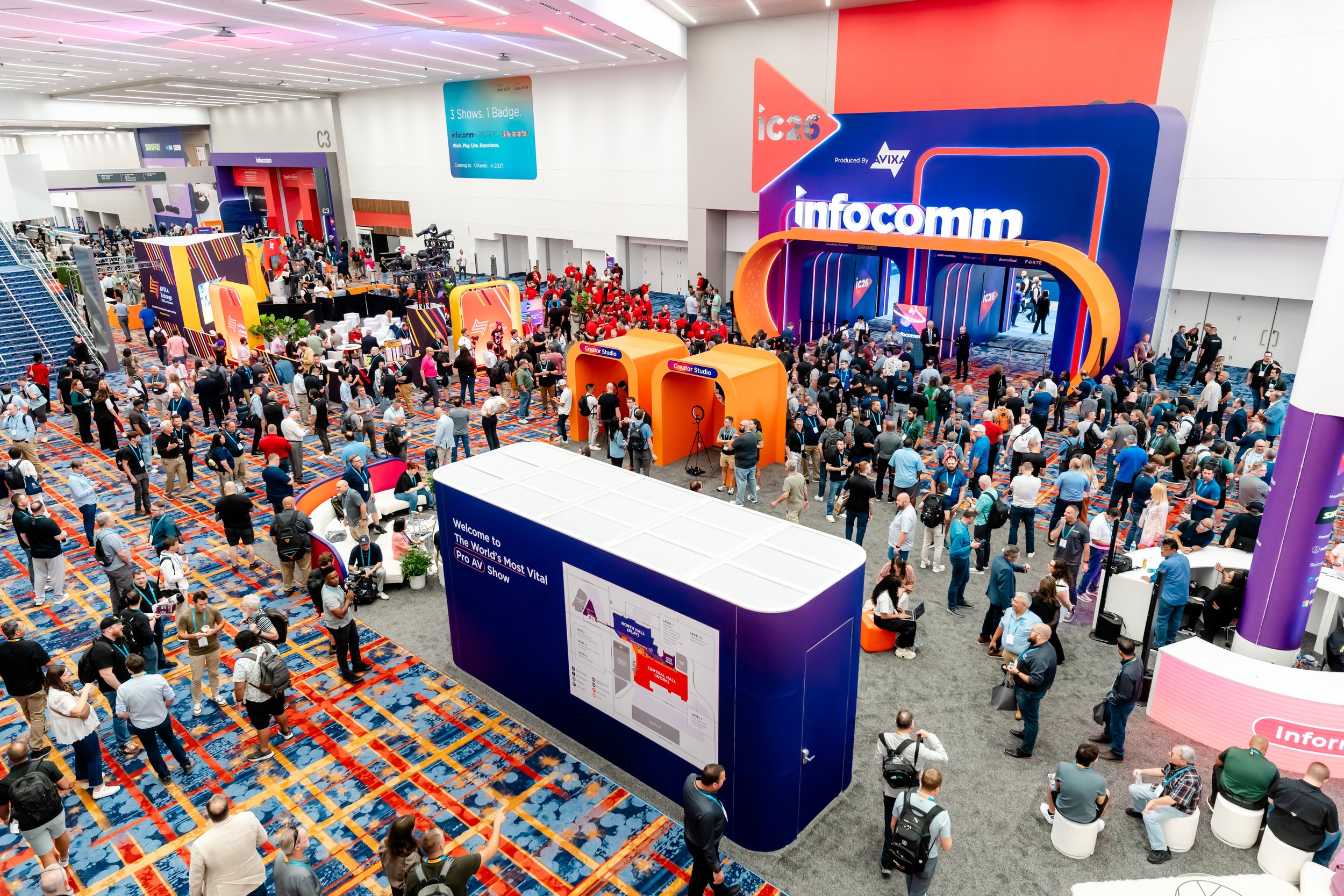
Every June, the AV industry heads to North America's largest professional audiovisual trade show. Here, manufacturers unveil their latest technologies, integrators explore what's next, and everyone gets a glimpse at what’s shaping the future of AV.
InfoComm 2026 attracted almost 30,000 attendees from 94 countries. The 807 exhibitors in attendance delivered no shortage of announcements, and with hundreds of new products launched every year, it's easy to get caught up in the headlines.
Our team spent the week in Las Vegas exploring the show floor, connecting with our manufacturing partners, and getting hands-on with the latest innovations across the AV industry. One trend stood out above the rest: manufacturers are making large-format displays easier to install, easier to manage, and more practical for everyday commercial applications.
Digital Displays Are Smarter, Simpler, and More Flexible
Displays were everywhere at InfoComm 2026, but it wasn't just about larger screens or higher resolutions. Manufacturers focused on making display technology easier to deploy, manage, and maintain while delivering better image quality and greater flexibility.
From all-in-one LED solutions and Micro LED technology to laser projection and cloud-based device management, the latest innovations are making high-performance displays more accessible than ever.
Here are some of the announcements that stood out:
Sony
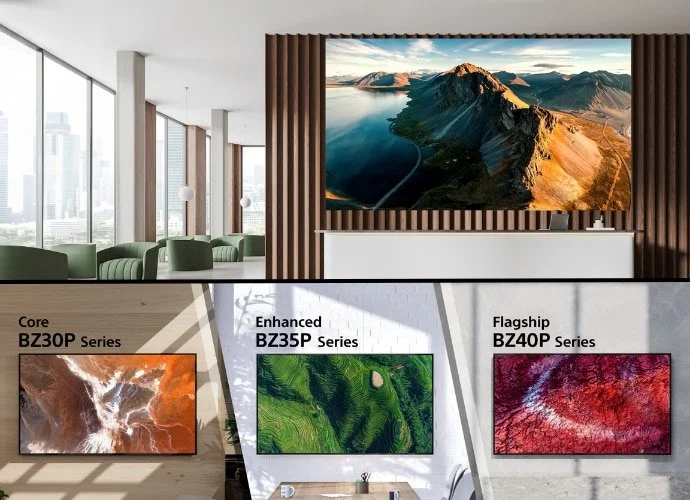
Sony BRAVIA Professional BZ-P Series
Sony showcased their latest lineup of scalable solutions, including BRAVIA Professional LCD displays, Crystal LED video walls, business projectors, and SRG pan-tilt-zoom (PTZ) cameras.
The latest additions to the BRAVIA Professional Display portfolio include 16 new 4K HDR models in the BZ-P series. With sizes ranging from 43 to 85 inches, up to 700 nits of brightness, Sony's AI‑powered XR signal processing, and Deep Black Non‑Glare technology, these screens deliver high quality images and contrast even in bright spaces.
Sony also expanded its Crystal LED family, with each series designed for different commercial applications. The S Series is slim, scalable, and energy‑efficient, great for corporate, education, and commercial environments. The Crystal LED UNIFY is a fixed 135-inch dvLED package that includes all the components for a hassle-free install, purpose-built for boardrooms, meeting rooms or community spaces
Both the BRAVIA Professional Displays BZ-P Series and the Crystal LED S Series received an AV Technology Best of Show 2026 award.
Samsung
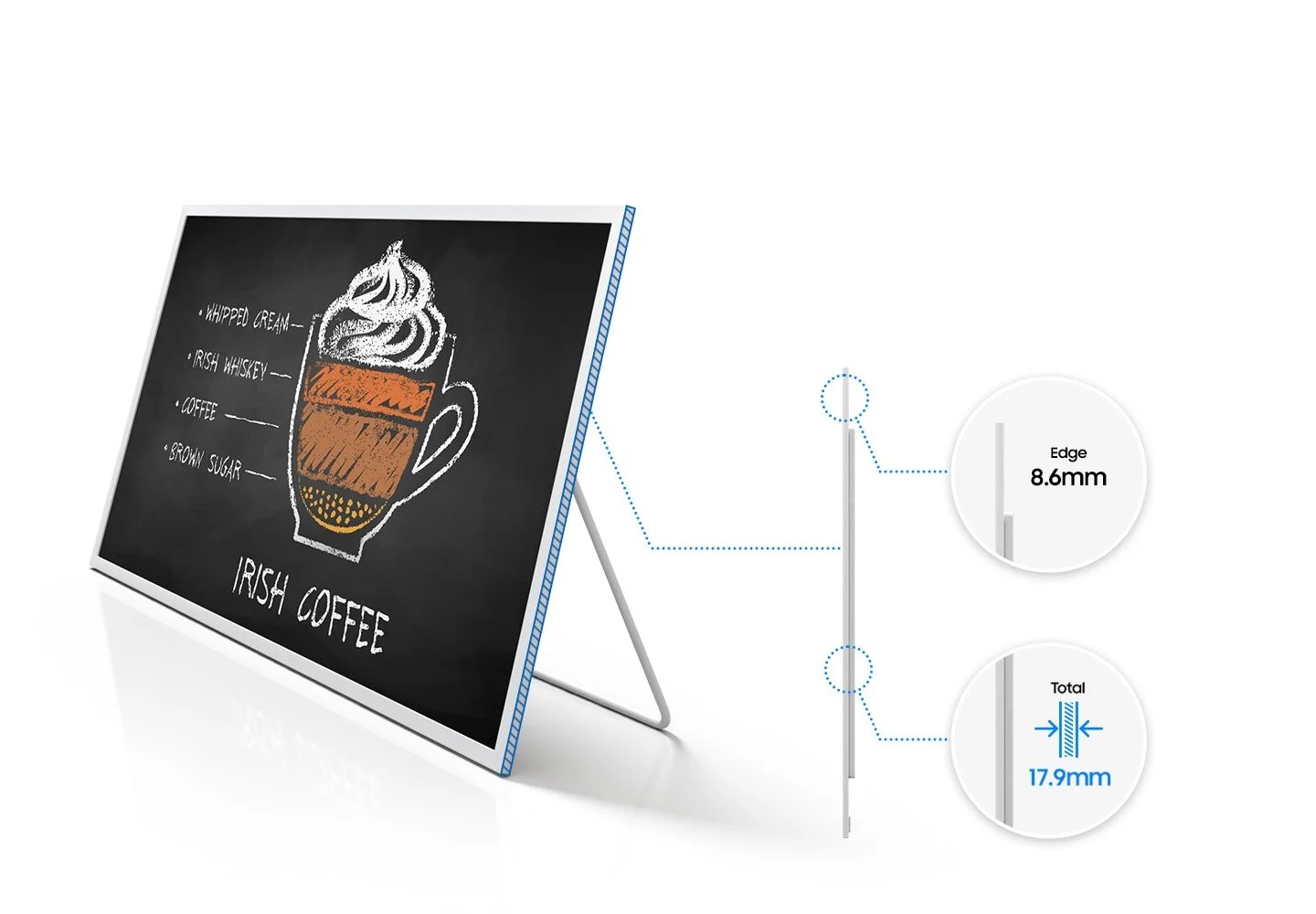
Samsung Colour E-Paper EMDX
Samsung continued expanding its commercial display portfolio, showcasing advances in digital signage and all-in-one direct-view LED solutions that were announced earlier this year.
The Color E-Paper is the world’s first display designed with a bio-resin housing derived from phytoplankton. The ultra-low-power, paper-thin solution is designed as a practical alternative to traditional printed signage. Businesses can quickly refresh promotions, menus, schedules, employee updates or customer messaging without the time and cost required to print and distribute new materials.
Their new 108-inch all-in-one version of The Wall combines the LED display, controller, and mounting hardware into a single package, reducing on-site setup time. It features a more compact, split-panel design that makes supersized LED installation as efficient as mounting two LCD screens rather than a full LED wall.
Color E-Paper received an AV Technology Best of Show 2026 Award.
ViewSonic
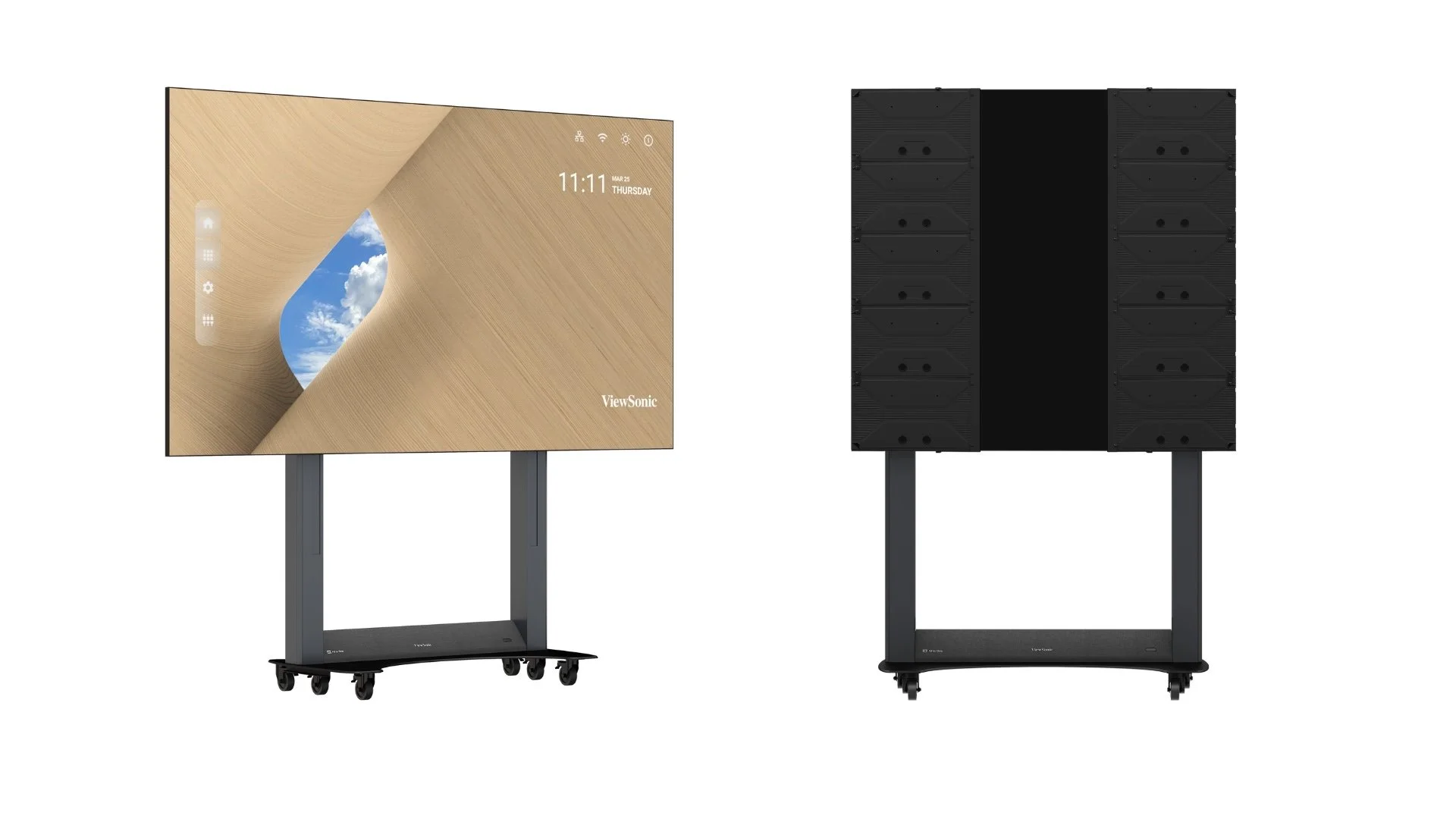
ViewSonic LDS136-152 All-in-One Direct View LED Display
ViewSonic expanded its commercial display portfolio with new direct-view LED, commercial LCD, and collaboration displays designed for corporate, education, and public environments.
The LDS136-152 combines a foldable 136-inch LED display, integrated controller, speakers, motorized height-adjustable stand, and durable flight case into a portable all-in-one solution. Designed for easy transport and storage, it allows organizations to deploy large-format LED displays in meeting rooms, classrooms, and training spaces without requiring a permanent installation.
ViewSonic also introduced the CDE31 and CDEG3 Series commercial displays. The CDEG3 Series is optimized for 4k video conferencing and integrates seamlessly into Q-SYS, Crestron, Extron, and AMX ecosystems. The broad compatibility lets IT teams manage key functions like power, volume, and inputs from one central spot.
ViewSonic received multiple industry awards for their interactive and commercial displays.
LG
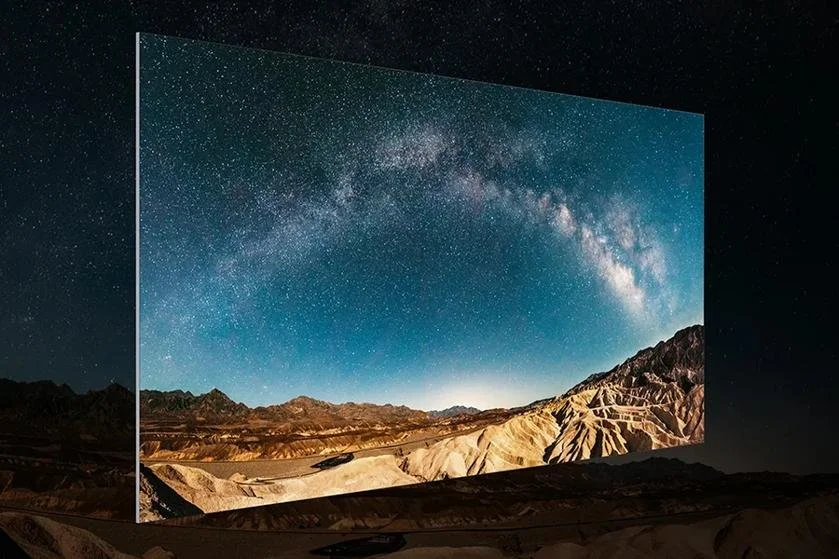
0.78 mm LG MAGNIT Active Micro LED 136’
LG expanded its Direct View LED (dvLED) portfolio with a range of new LG MAGNIT and All-in-One displays designed to deliver premium visual performance across corporate, retail, education, and public environments.
The LG MAGNIT Gen 2 Micro LED display features enhanced contrast, deeper blacks, improved grayscale performance, and a fast refresh rate for smoother, more realistic images. The new Line-to-Dot technology reduces the visibility of minor pixel imperfections, producing cleaner images, and with its 1.25 mm pixel pitch, the Gen 2 series is optimized for close-viewing environments such as boardrooms, studios, and premium spaces.
LG also debuted their new Essential model which adds an ultra-slim, entry level option to the LG MAGNIT line. Despite delivering enhanced color reproduction and consistent image quality, they consume roughly 50 percent less power than comparable SMD-based models. Its lightweight cabinets and larger module design reduce installation time while delivering a high-quality, cost-effective option for boardrooms, executive briefing centres, corporate lobbies, and retail environments.
Their Active Micro LED technology earned multiple Best of Show awards.
Beyond LED
While there were lots of discussions around dvLED at InfoComm this year, it wasn't the only display technology making headlines. Projection continues to evolve alongside it with brighter laser light sources, better colour reproduction, greater installation flexibility, and new software tools that simplify deployment and management. Not every space needs an LED wall, and for education, corporate, entertainment, and large venue environments, projection remains a practical and cost-effective solution.
Panasonic
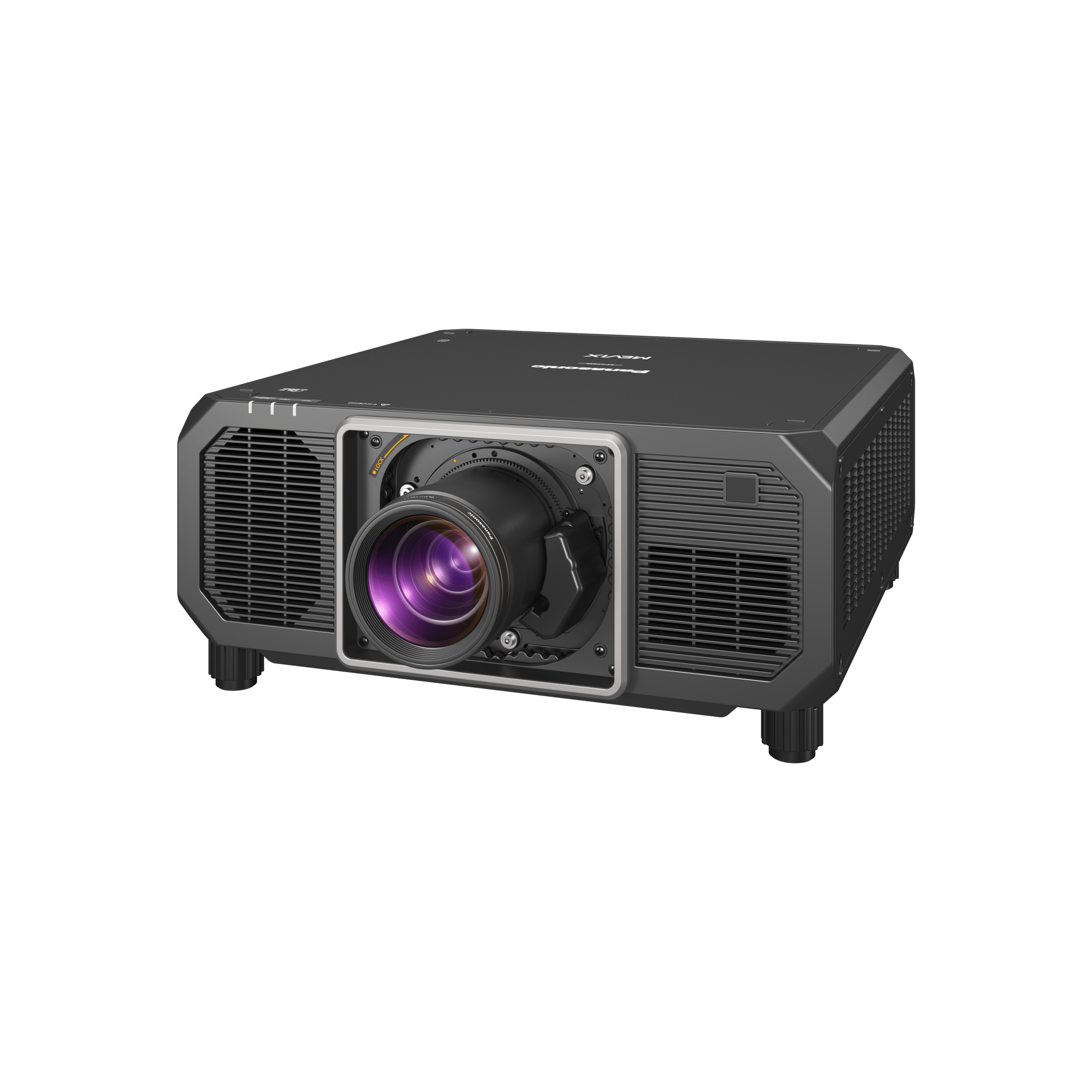
Panasonic 1-Chip DLP RGB PT-HTQ20 laser projector
Panasonic showcased its latest MEVIX display ecosystem, combining new projection technology with software tools designed to simplify everything from system design to content management and remote monitoring. Their latest RGB laser projector delivers 20,000 lumens of brightness with 4K resolution. The newly developed VIVID PRIME RGB laser light source provides over 95% Rec. 2020 colour gamut coverage for a more accurate, lifelike viewing experience.
The VMQ85 Series 4K LCD projectors were also introduced, offering up to 8,000 lumens of brightness, Quad Pixel Drive 4K technology, extensive zoom and lens shift capabilities, and built-in setup tools that simplify installation. Beyond the hardware, Panasonic expanded its workflow ecosystem with updates to XTEN-AV, HIVE Media Control, and Remote Monitoring Service Pro, giving integrators centralized tools for system design, cloud-based content management, device monitoring, and remote firmware updates across the entire display network.
The Panasonic 1-Chip DLP RGB PT-HTQ20 laser projector won the AV Technology Best of Show 2026.
Epson
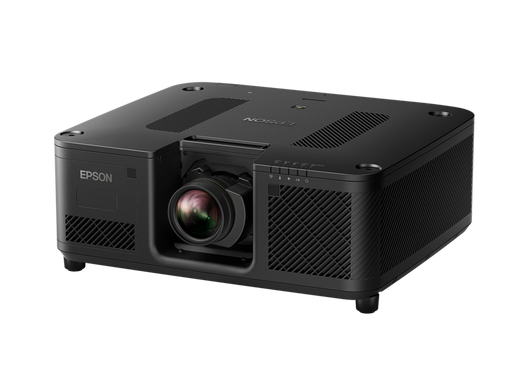
Epson EB-XQ2030B
Epson showcased their latest innovation, the world’s smallest and lightest 30,000-lumen laser projector. The new EB-XQ2030B delivers vivid 3-chip 3LCD colour and 4K detail designed for versatility and performance, delivering high quality images, expanded connectivity, and greater throw-ratio coverage.
Epson also introduced the H-Series lenses with four all-new lenses and six updated models, providing greater flexibility for everything from ultra-short throw to large venue applications. New lens options include an L-shaped lens for 90-degree off-axis projection and a short throw ratio model for rear projection and tight spaces, while added zoom capability expands installation flexibility. Together, the lineup allows floors, ceilings and unconventional surfaces to become display screens with consistent brightness and colour.
What's Next
InfoComm 2026 showed that the conversation around displays is no longer just about resolution or screen size. From all-in-one LED systems and Micro LED advancements to next-generation projection and centralized management tools, manufacturers are making high-performance display technology more accessible for everyone.
Whether you're designing a new boardroom, upgrading digital signage, or planning a campus-wide display refresh, choosing the right solution starts with understanding how each technology fits your space, users, and long-term goals.
Planning your next project? Our team can help you evaluate the latest display technologies and recommend the right solution for your organization.
This is the second instalment in our InfoComm 2026 recap series. Check out our latest recap on all things audio, and stay tuned as we continue exploring the biggest announcements and innovations from the show floor!




Frequently Asked Questions
-
InfoComm 2026 showcased major advancements in direct-view LED (dvLED), Micro LED, commercial LCD displays, laser projection, and digital signage. Manufacturers including Sony, Samsung, LG, ViewSonic, Panasonic, and Epson introduced new display technologies focused on easier installation, improved image quality, greater flexibility, and simplified management.
-
Direct-view LED (dvLED) is a display technology that creates images using millions of tiny LEDs rather than an LCD panel. Unlike traditional video walls, dvLED displays have no visible bezels between panels, allowing them to produce seamless, high-brightness images in virtually any size or aspect ratio.
-
Micro LED uses much smaller LEDs than conventional direct-view LED displays, resulting in finer pixel pitches, improved contrast, higher brightness, better colour accuracy, and enhanced energy efficiency. These improvements make Micro LED ideal for applications where viewers are positioned close to the display, such as boardrooms, executive briefing centres, and studios.
-
Many manufacturers showcased all-in-one LED displays at InfoComm 2026 because they simplify deployment. By combining the LED display, controller, speakers, and mounting hardware into a single package, these systems reduce installation time, minimize configuration, and make direct-view LED more accessible for meeting rooms, classrooms, and corporate environments.
-
Yes. While direct-view LED continues to grow in popularity, laser projection remains one of the most practical solutions for classrooms, auditoriums, museums, and large venues. New laser projectors offer higher brightness, improved colour reproduction, longer operating life, and greater installation flexibility than previous generations.
-
Commercial digital displays improve communication, collaboration, and customer engagement. Compared to consumer displays, they offer higher brightness, longer operating life, better reliability, centralized management, and professional integration with AV control systems, making them well suited for meeting rooms, digital signage, education, healthcare, and corporate environments.
-
One of the biggest trends at InfoComm 2026 was making professional display technology easier to deploy and manage. Manufacturers focused on all-in-one LED systems, cloud-based device management, energy-efficient digital signage, and display ecosystems that simplify installation while improving long-term reliability and performance.