
How to Achieve Even Audio Coverage in a University Lecture Hall
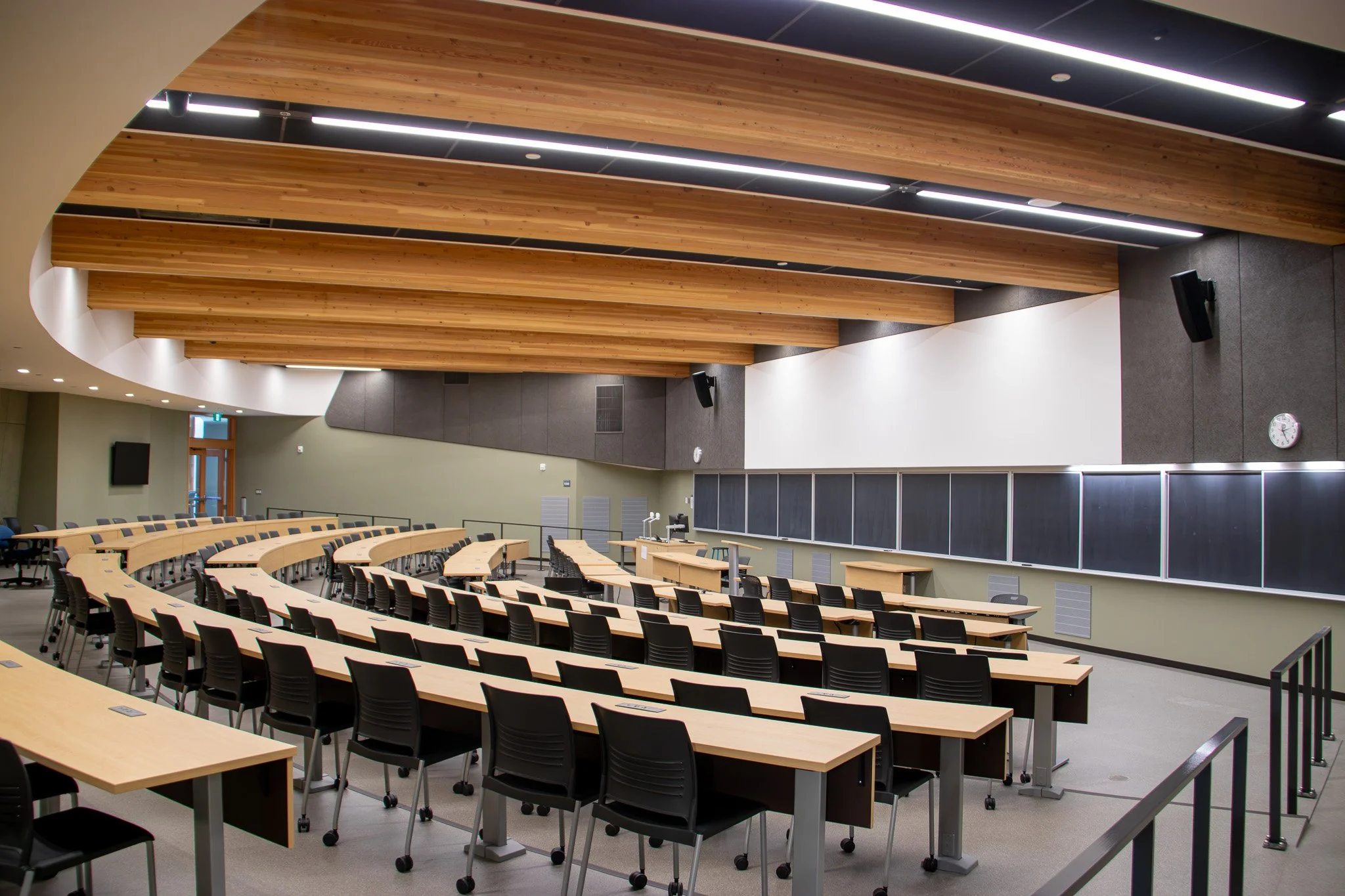
In a university lecture hall, everyone should be able to hear the presentation clearly, whether they are sitting in the first row or the back corner of the room.
That sounds straightforward, but lecture halls often have high ceilings, tiered seating, and architectural designs that make it challenging to achieve consistent audio coverage. The constant hum of HVAC systems, audience noise, and room echoes can make it even harder to deliver clear, intelligible speech throughout the room.
The solution is not just turning up the volume. A well-designed lecture hall audio system focuses on controlling reflections, reducing background noise, improving speech intelligibility, and delivering the right amount of sound evenly throughout the room.
Room Design and Acoustics
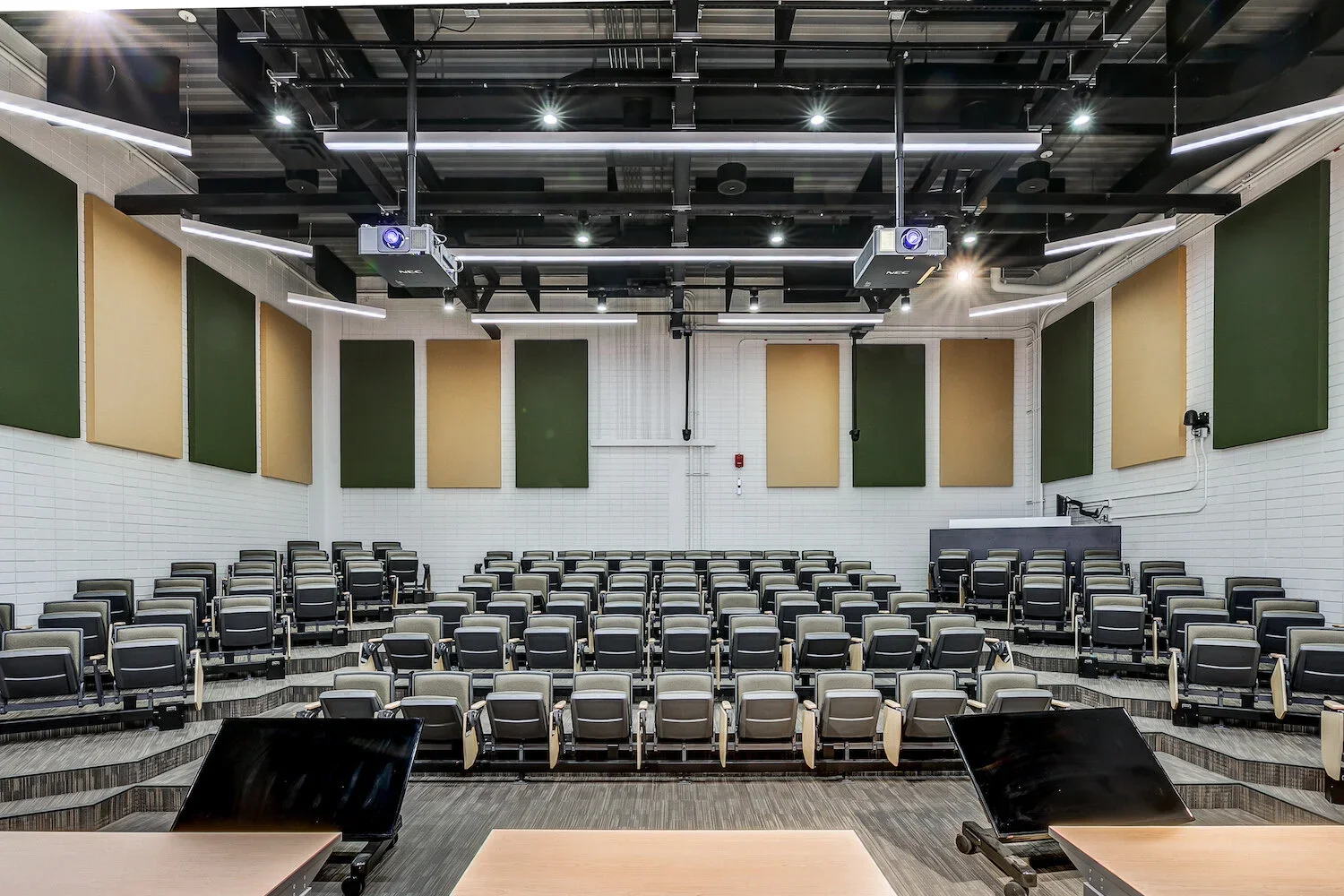
The size and design of an auditorium influences how sound travels. Seating layout, ceiling height, wall and floor materials, and other reflective surfaces can all affect what students hear.
Reverberation is a particularly important aspect to consider. Sound waves can easily reflect off hard surfaces and create echoes. The more these echoes bounce around, individual words start to blur together, making it harder to hear what is being said. Turning up the volume doesn’t address the underlying acoustic issue, it just increases the amount of sound waves that can reverberate, making the intelligibility worse.
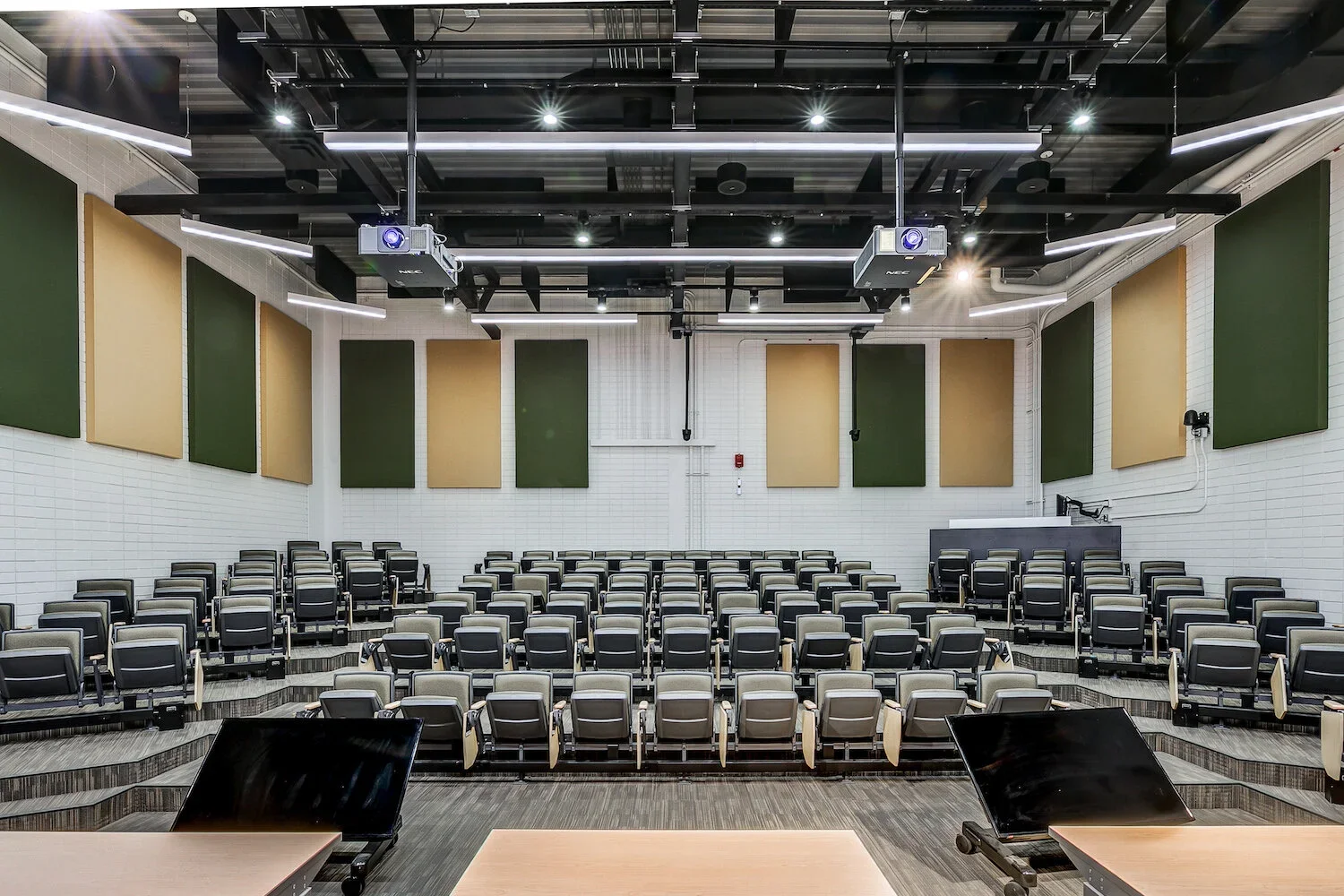
A loudspeaker system can’t always compensate for poor acoustics, but sound treatments can. Acoustic panels use absorptive materials to trap reverberation before it has a chance to echo. Using these on the ceilings and walls, as well as carpeted floors and cloth seats, can reduce excessive noise reverberation to create a better foundation for the sound system.
Research shows that distance matters: A 2026 study of two university lecture halls found that speech intelligibility decreased as the distance between the speaker and listener increased, as background noise increased, and as reverberation increased. Even when speakers increased their vocal effort, it did not fully compensate for the loss in intelligibility.
Choosing the Right Speakers
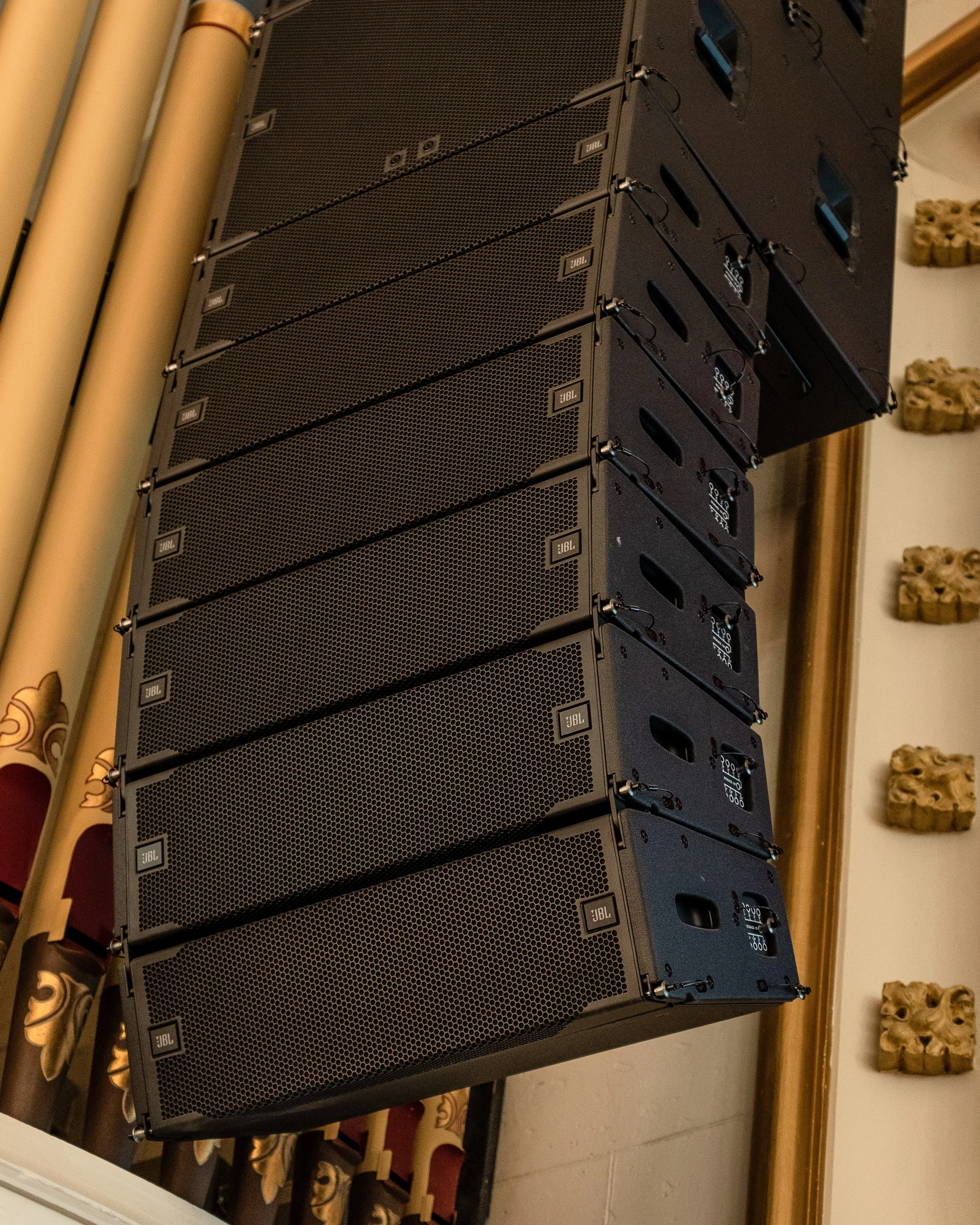
Loudspeaker directivity, aiming, mounting height, and processing all affect how the room sounds, and how well the audience can hear and understand the presenter. A speaker that points towards walls, ceilings, or other reflective surfaces can create unnecessary reflections, making it harder to hear the lecture.
Traditional point-source speakers are designed to produce a range of sound from a single source, emitting soundwaves in a spherical pattern. These are a good option for small to mid-sized lecture halls.
Column and line-array systems can provide more controlled coverage in larger spaces. These vertically stacked speakers are designed to project sound across long distances and narrow the vertical spread of sound. However, because they are hung from the ceiling, it could cause sightline issues is some spaces.
Digitally steerable loudspeakers can be useful in spaces where conventional speaker placement is difficult. Beam steering allows the vertical or horizontal coverage of a loudspeaker to be adjusted to suit the room layout.
Placing additional speakers throughout the space can reduce the distance sound needs to travel, helping maintain more consistent volume. However, adding more speakers is not automatically better. When multiple speakers are reproducing the same speech, their placement and timing need to be carefully coordinated. If the same sound reaches a listener at noticeably different times, it can create audible echoes or other interference that makes speech less clear.
Using speaker delays and other system processing can help ensure the sound from different speakers works together as one system. In some lecture halls, the audience area may also need to be divided into multiple coverage zones. A room with a wide or irregular seating arrangement may benefit from treating different sections independently rather than trying to cover everything with a single acoustic pattern.
The Microphone Matters

The loudspeaker system is only one part of the audio equation. Even a well-designed speaker system cannot make unclear speech sound clear if the microphone is not capturing a strong, clean signal in the first place.
Microphone placement is particularly important in a large lecture hall. The farther a microphone is from the lecturer, the more room noise and reflected sound it can pick up. A gooseneck podium microphone can work for someone who stays at the front of the room, whereas a wireless handheld or lavaliere microphone can provide a more consistent pickup when the presenter moves around.
Once that clean signal is captured, digital signal processing (DSP) can be used to manage the audio. Equalization, mixing, automatic gain control, feedback management, and other processing can help maintain a consistent experience for students throughout the room.
Testing the System
Even coverage should be tested seat to seat, not just from the lecture podium. During commissioning, an AV team can test sound levels and speech intelligibility throughout the space to identify areas where coverage, reverberation, background noise, or system timing may be affecting the experience.
Measurements can then be used to fine-tune speaker levels, delays, aiming, and processing so the system performs consistently across the room.
Audio coverage can be measured: ANSI/AVIXA A102.01 is the AVIXA standard for measuring audio coverage in listener areas. It defines measurement procedures and performance classifications for evaluating how consistently sound is distributed across an audience, using multiple measurement positions and A-weighted sound-pressure-level measurements.
Even Coverage Starts with Good Design
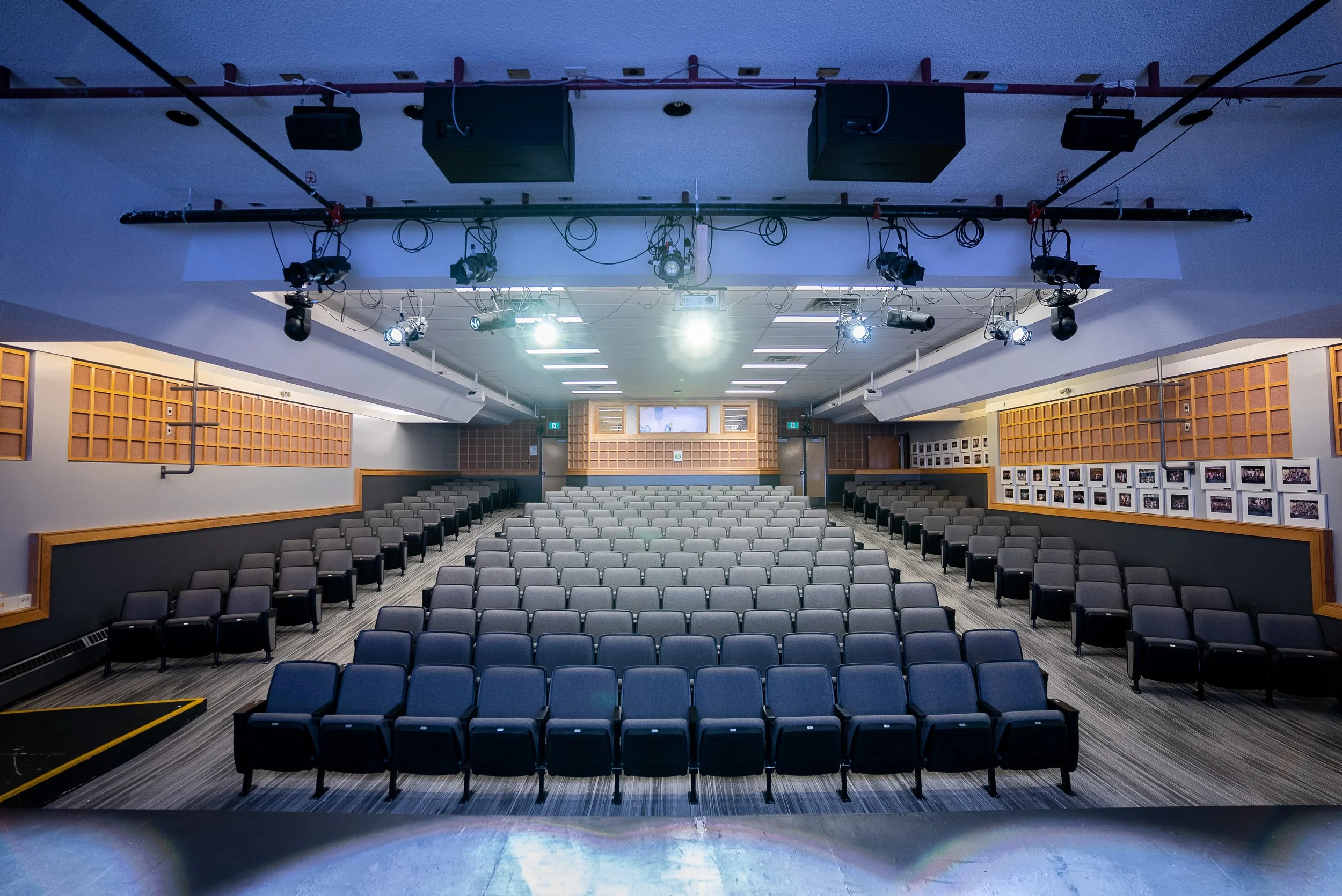
A lecture hall does not need to be louder to be easier to hear. It needs an audio system that works with the room, accounts for how sound travels, and delivers consistent coverage across the seating area.
There is no single layout that works for every university lecture hall. Each space needs to be designed with the audience in mind, taking into account the room's dimensions, seating arrangement, ceiling height, acoustics, and architectural design.
Evolution AV has experience designing and delivering AV systems for a wide range of educational and performance spaces, including the University of Victoria, University of Regina, and Confederation College, as well as larger amphitheatres and theatres such as Darke Hall and Theatre Calgary. With experience across spaces of different sizes, layouts, and uses, the team understands how to approach audio design, from speaker selection and placement to system tuning and commissioning.
For universities planning a new lecture hall or looking to improve an existing one, that starts with understanding the space before selecting equipment. Evolution AV can help assess the room, develop the audio design, and bring the system through installation, commissioning, and ongoing support.







Frequently Asked Questions About University Lecture Hall Audio
-
Improving audio coverage starts with understanding the room. Speaker type and placement, room acoustics, microphone selection, system processing, and speaker timing all affect how evenly sound reaches the audience. Testing the system throughout the seating area can also help identify and correct coverage issues.
-
There is no single speaker type that works for every lecture hall. Point-source speakers, column speakers, line-array systems, and digitally steerable loudspeakers can all be appropriate depending on the room size, seating layout, ceiling height, acoustics, and desired coverage. The speaker system should be selected based on the requirements of the space rather than a one-size-fits-all approach.
-
Hard surfaces can reflect sound and create excessive reverberation, which can make speech less intelligible. Acoustic treatments such as wall and ceiling panels, along with appropriate flooring and seating materials, can help reduce reflections and create a better environment for clear speech.
-
The farther a microphone is from the person speaking, the more likely it is to pick up room noise and reflected sound along with their voice. Choosing the right microphone and placing it appropriately can help provide a cleaner signal for the sound system to reproduce.
-
Not necessarily. Additional speakers can help reduce the distance sound needs to travel, but multiple speakers also need to be properly positioned, levelled, and time-aligned. If speakers are not coordinated, the same sound can reach listeners at different times and create interference or audible echoes.
-
Audio systems can be tested from different seating positions throughout the room to evaluate sound levels, speech intelligibility, and consistency. Measurements can help identify areas that need adjustments to speaker placement, aiming, levels, delays, or system processing.