What is an AV Integrator and What Do They Do?

Any new construction build has a lot of moving pieces. Architects, general contractors, electrical contractors, consultants, vendors, and several others have an important part to play, but where does an AV integrator fit in?
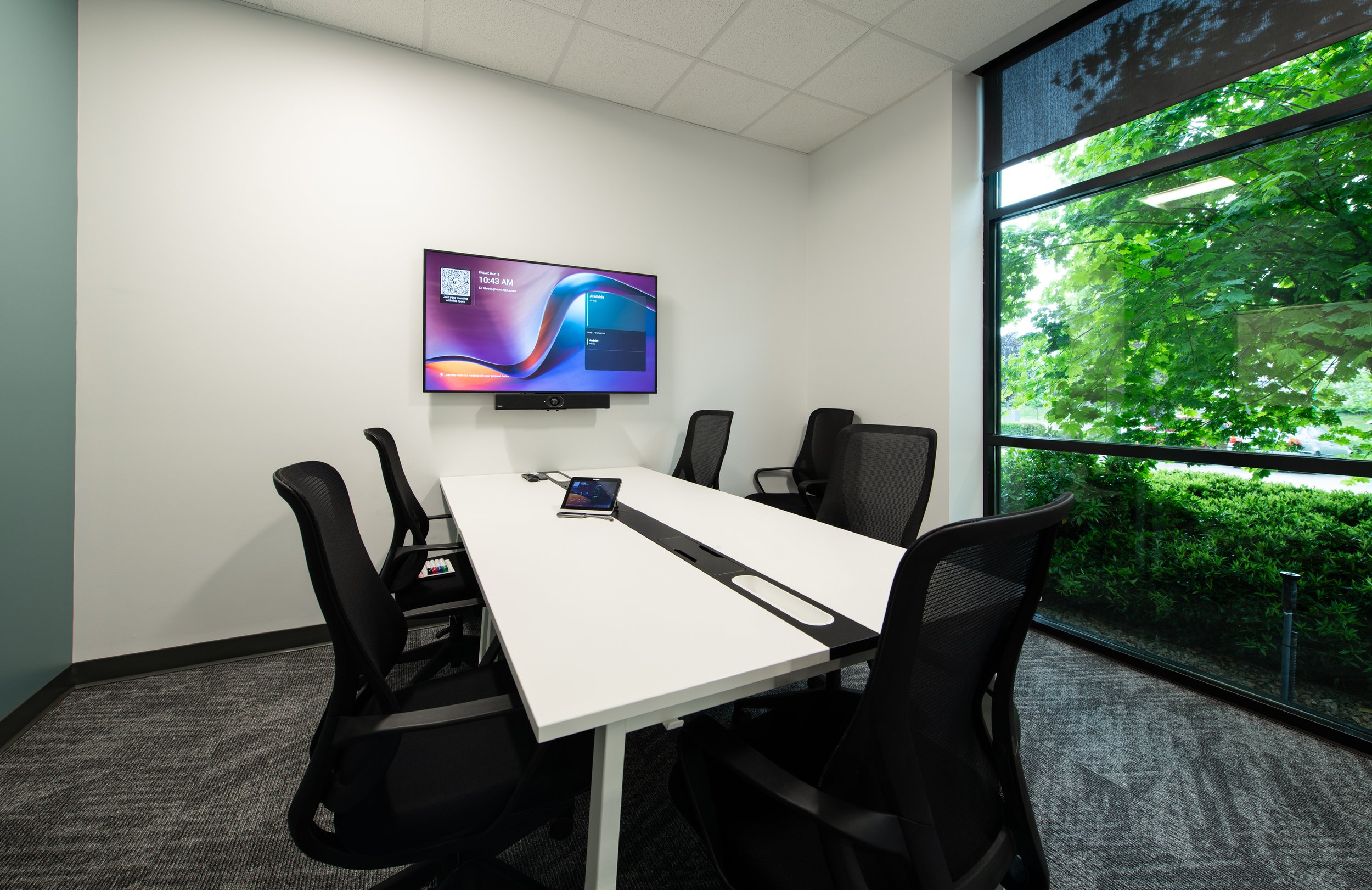
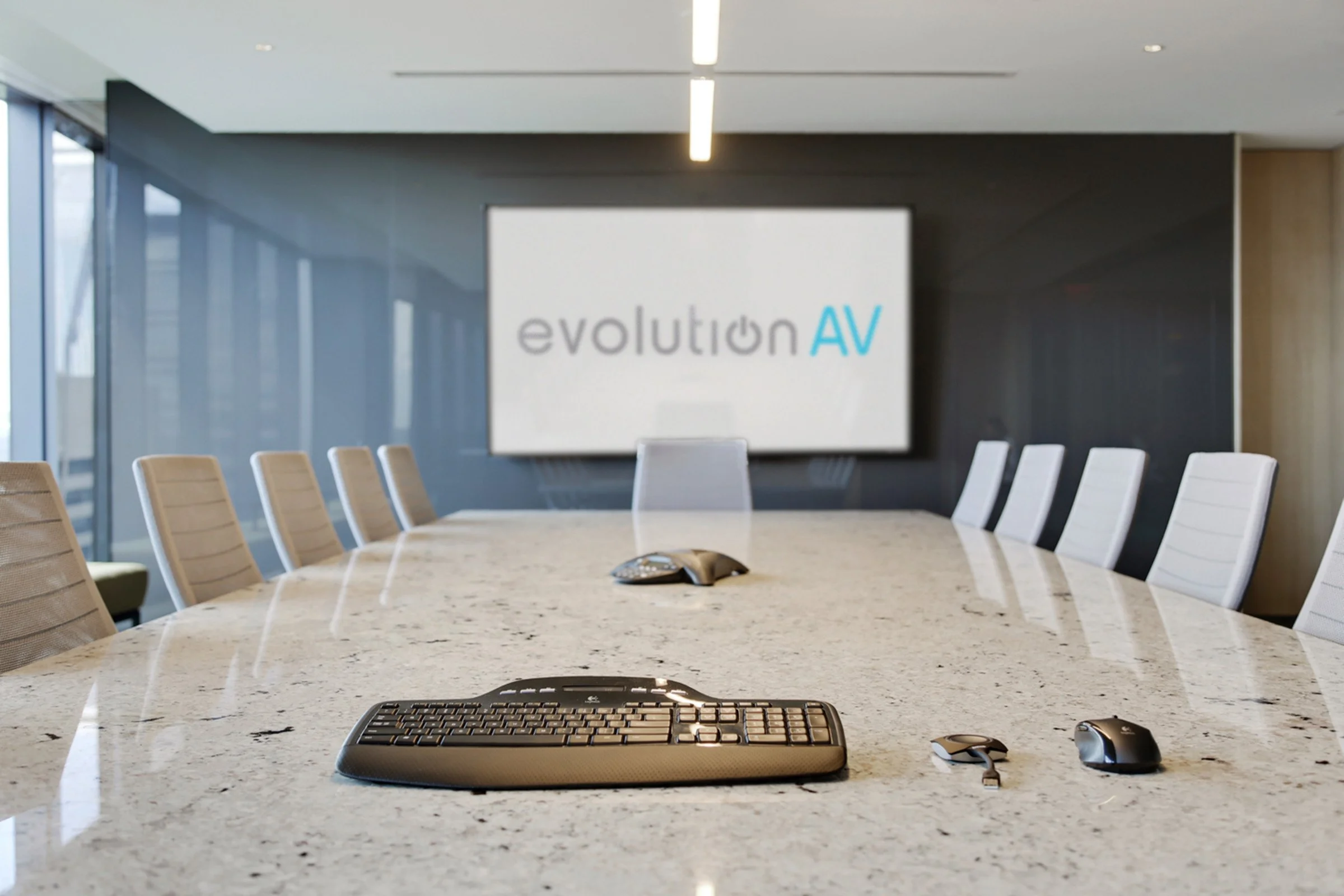
An AV integrator looks at a space, its needs, and its users to deliver a complete audiovisual solution. This can include everything from displays, projectors, cameras, microphones, speakers, control systems, acoustics, and the infrastructure that connects it all.
It’s more than just installing equipment, though. At Evolution AV, we take an end-to-end approach, designing, building, programming, installing, and providing ongoing support for technology solutions tailored specifically for each project. That means our role can start well before equipment is selected and continue long after the installation is complete.
What does an AV integrator do?
Design
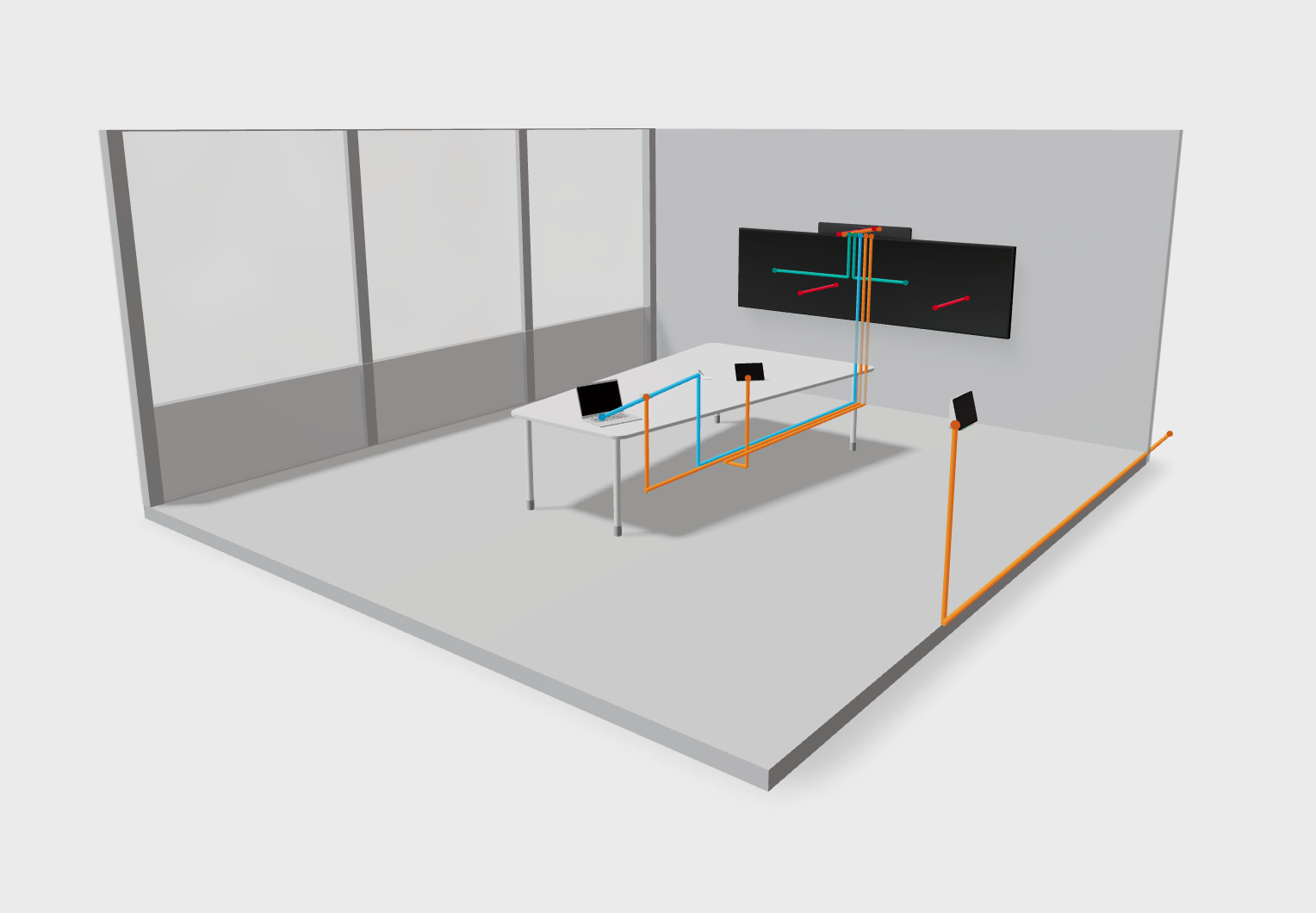
Whether it’s a small huddle room or a large theatre, every space has different requirements. AV design starts with understanding how the room will be used and what the technology needs to accomplish.
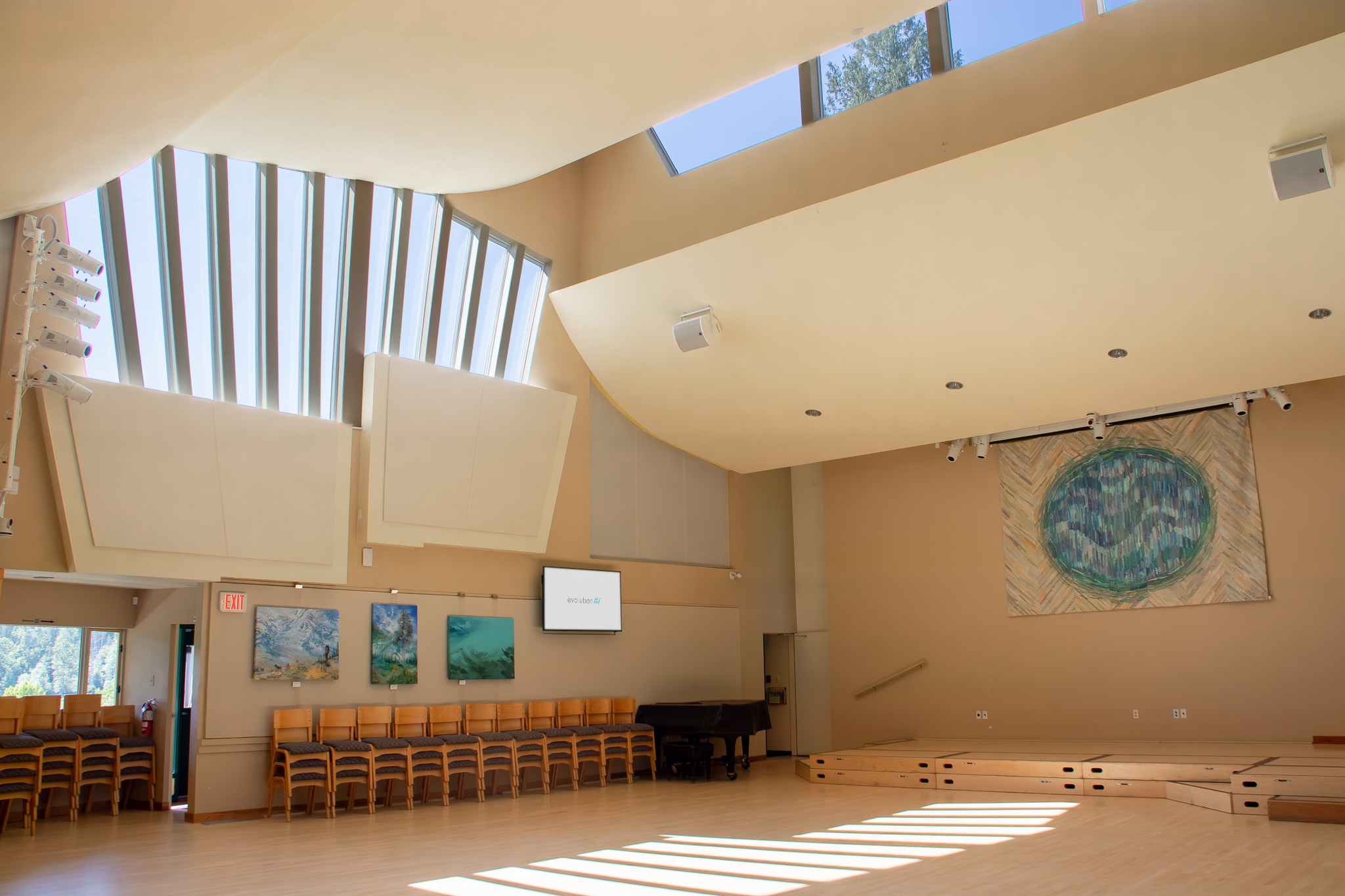
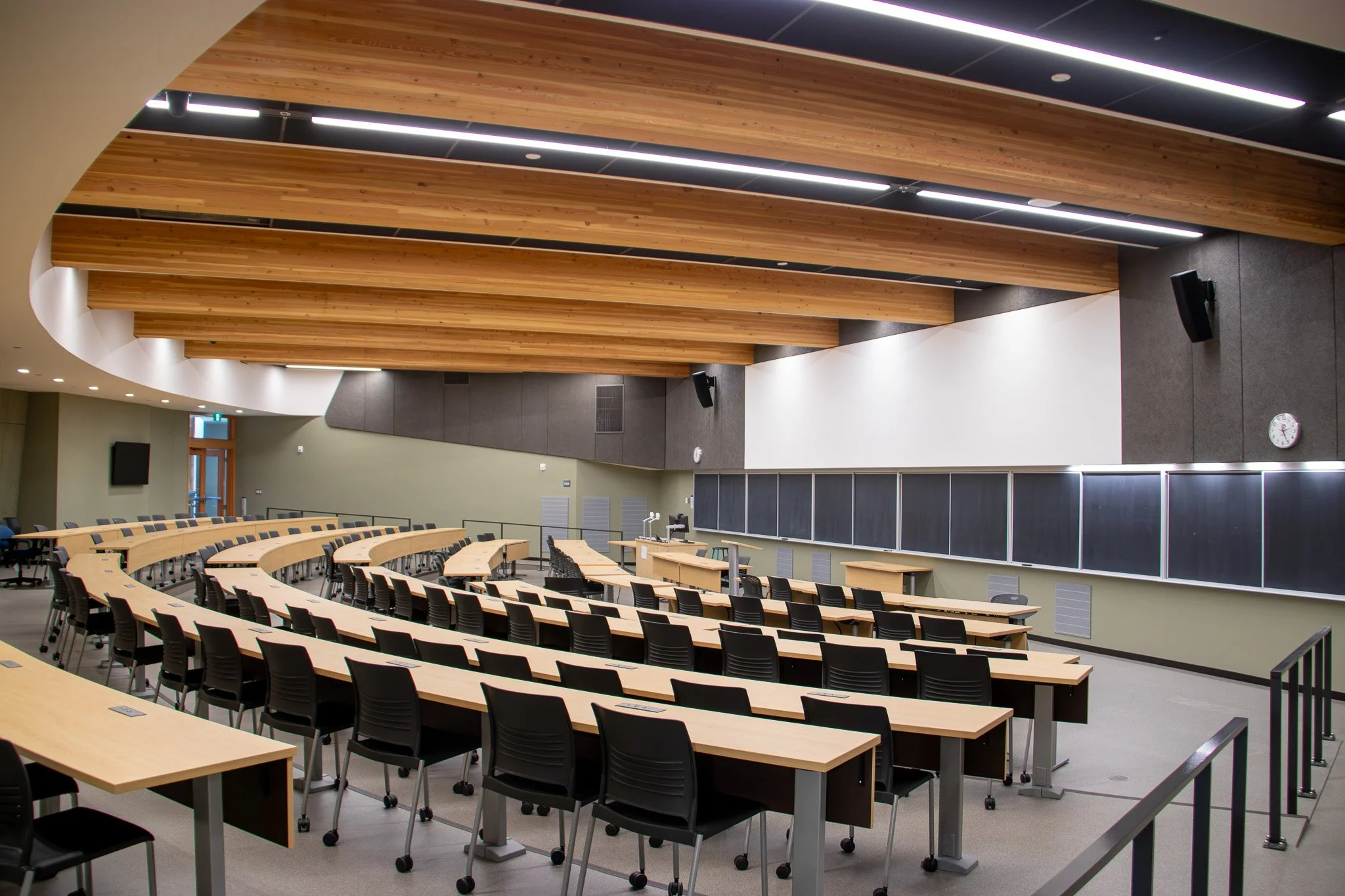
Environmental factors like acoustics, ambient lighting, viewing angles, furniture layouts, ceiling heights, and even the architecture of the room can all impact how an AV system performs. A display might look great on paper, but if people at the back of the room can't see it clearly, it's not doing its job. The same goes for audio. Having high-quality speakers doesn’t matter if they're positioned poorly or the room has too much echo.
From there, the system is designed around those requirements, including equipment selection, signal flow, control systems, equipment locations, and the infrastructure needed to bring everything together.
Installation and Integration
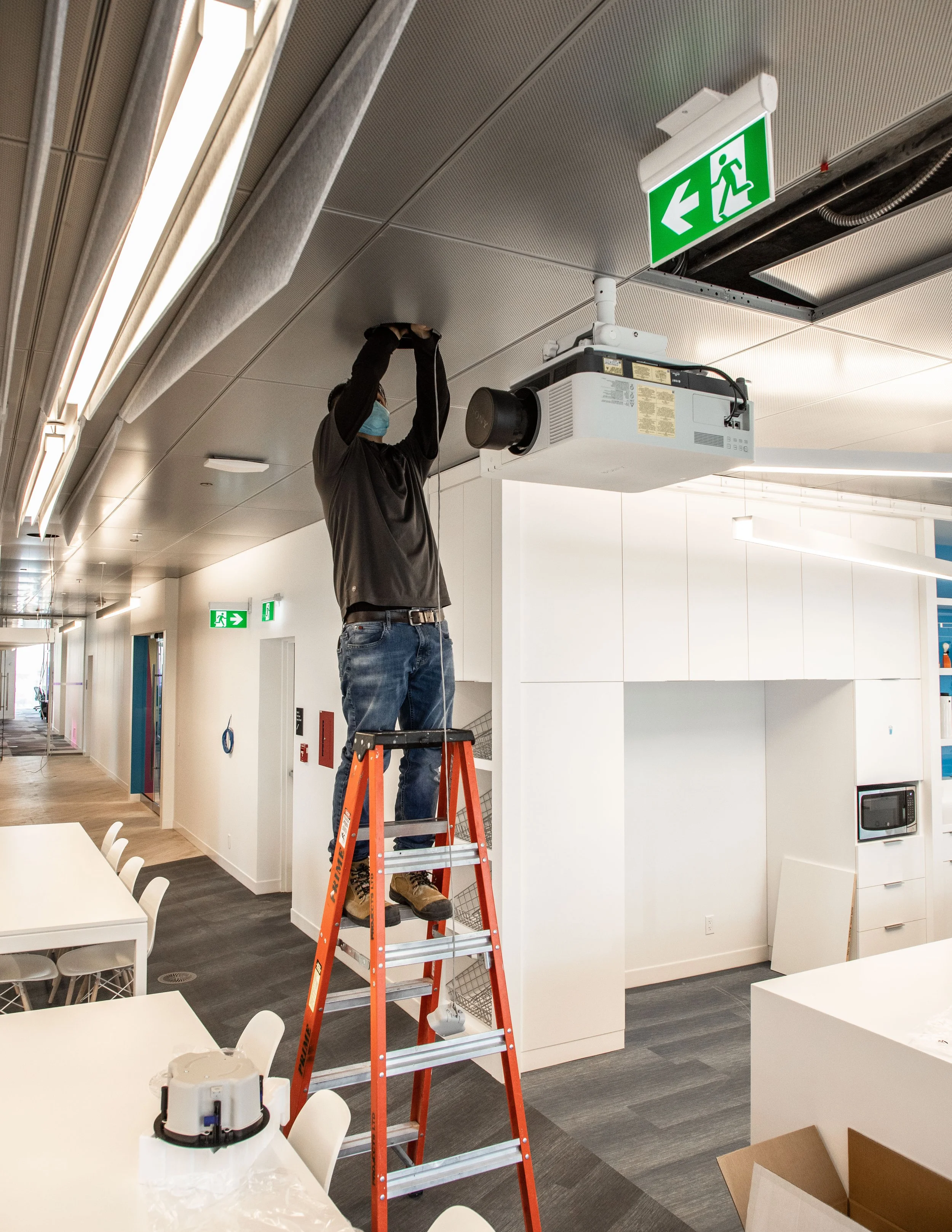
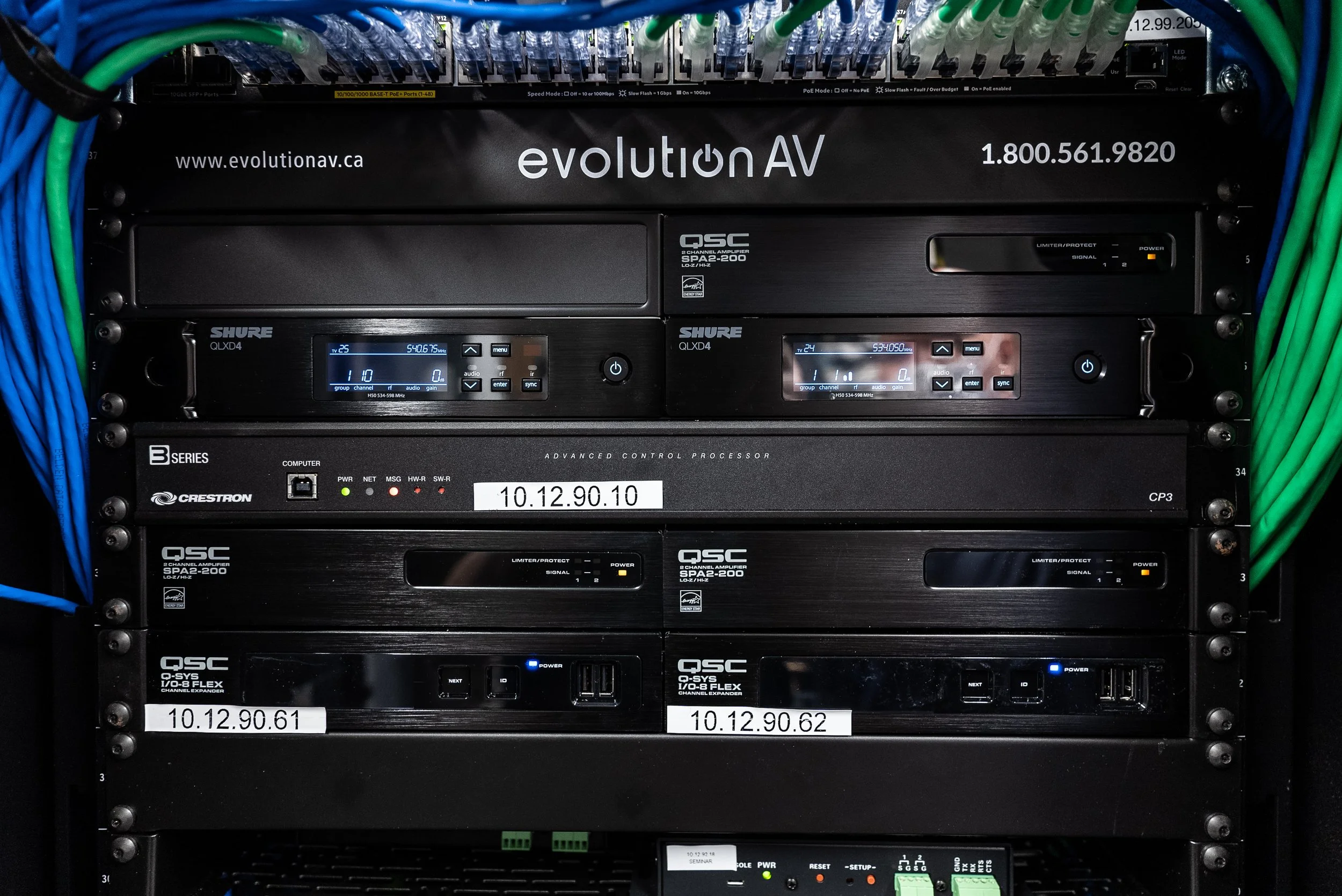
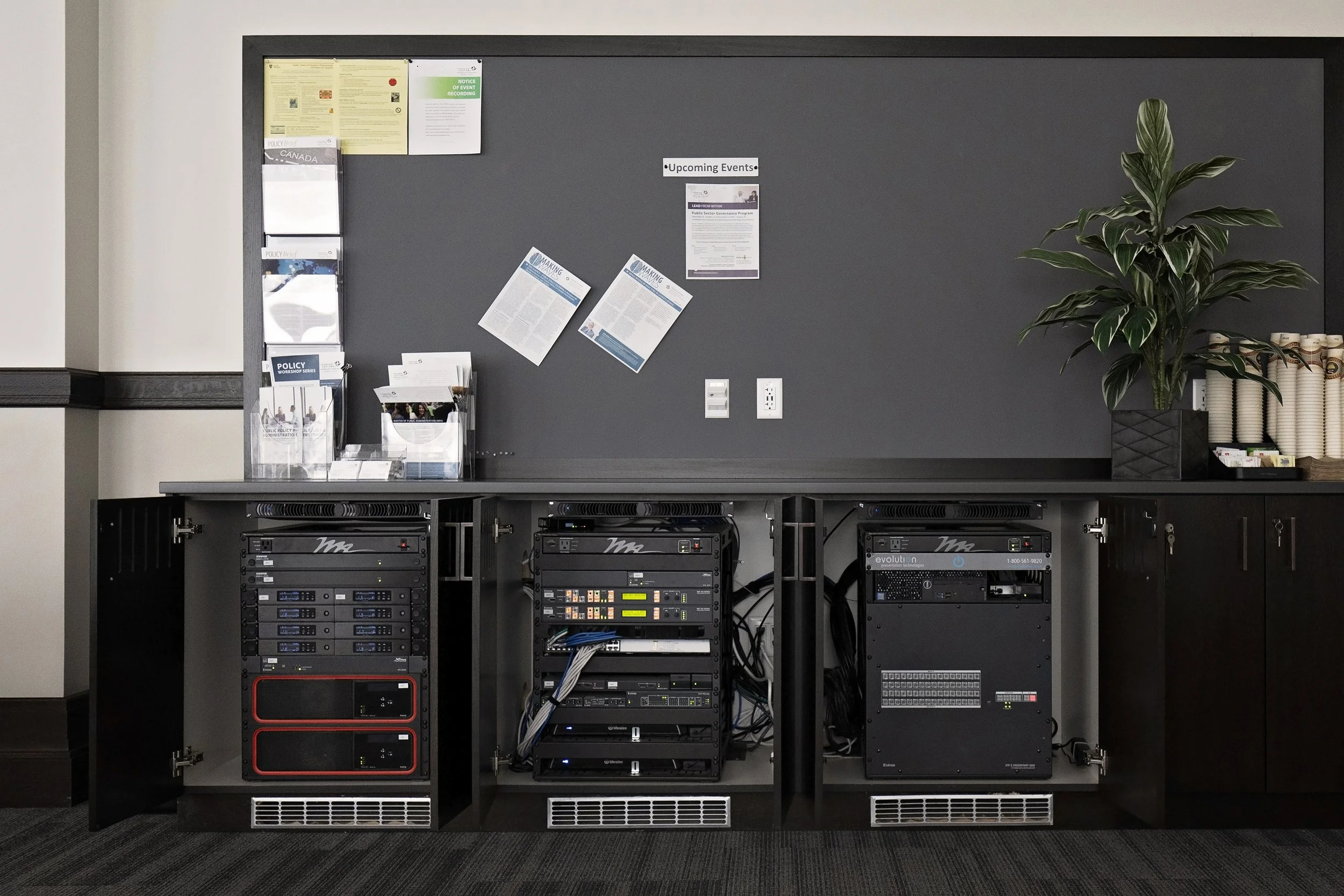
Once the design is complete, technicians begin to install and connect the system. This involves running and terminating cabling, installing equipment racks, mounting cameras and microphones, and connecting the AV system to the building's power and data infrastructure.
It’s important to consider how the technology fits into the space. Equipment can be integrated seamlessly into the ceilings, walls, or furniture so it feels like part of the room rather than something added afterward. Regardless of where it’s installed, technicians need to ensure cameras are positioned with proper sight lines, microphones pick up voices without background noise, and speakers are providing enough coverage throughout the space.
Programming and Commissioning
AV programmers write and configure the software that allows complex audio, video, lighting, and automation systems to work together.
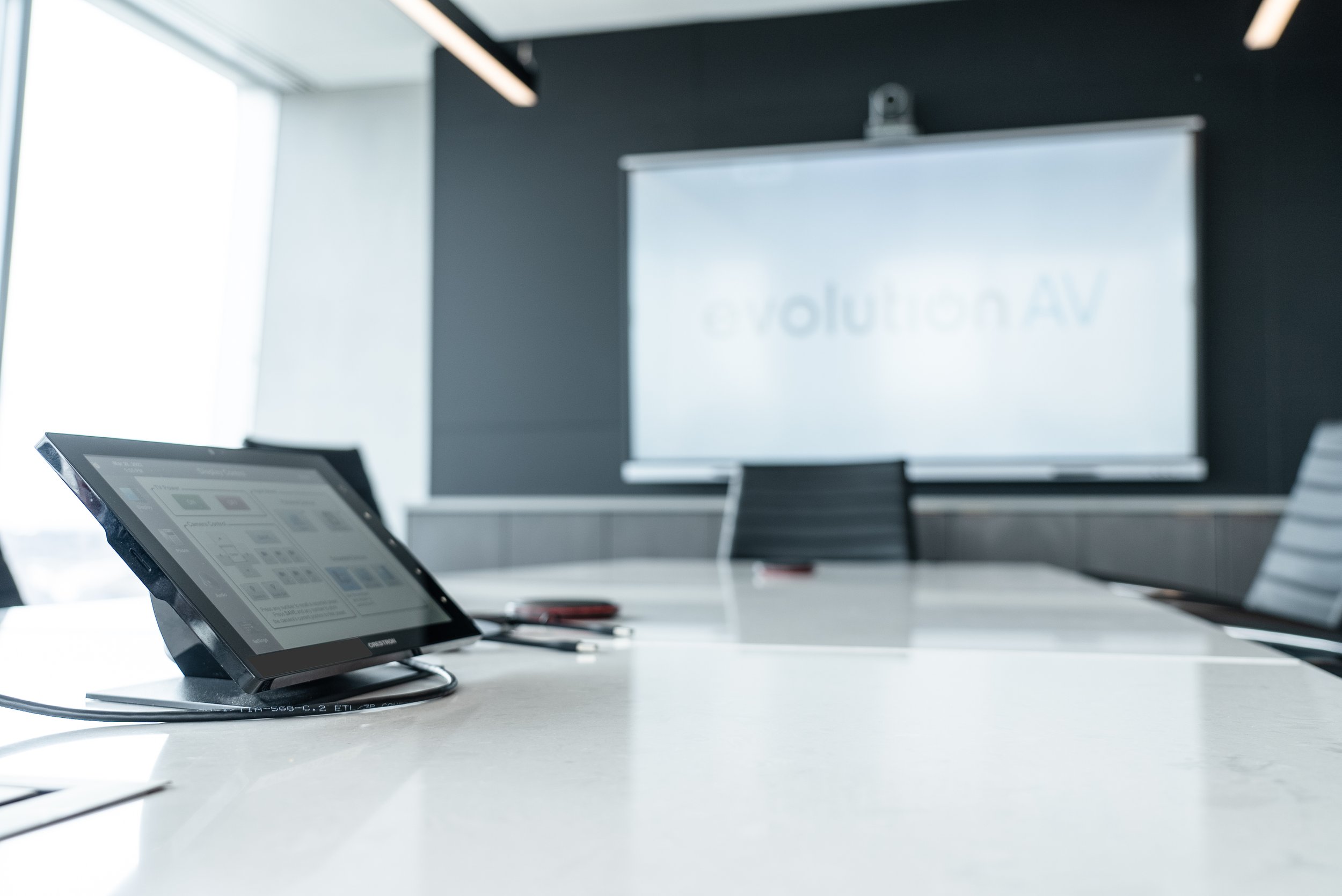
A control system might allow a user to start a presentation, adjust the volume, select a source, or join a video call with the push of a button. Lights and displays could turn on when someone walks into the room, and the scheduling system can automatically mark the space as occupied. The AV system controls multiple devices and processes at once, but users only interact with one simple interface.
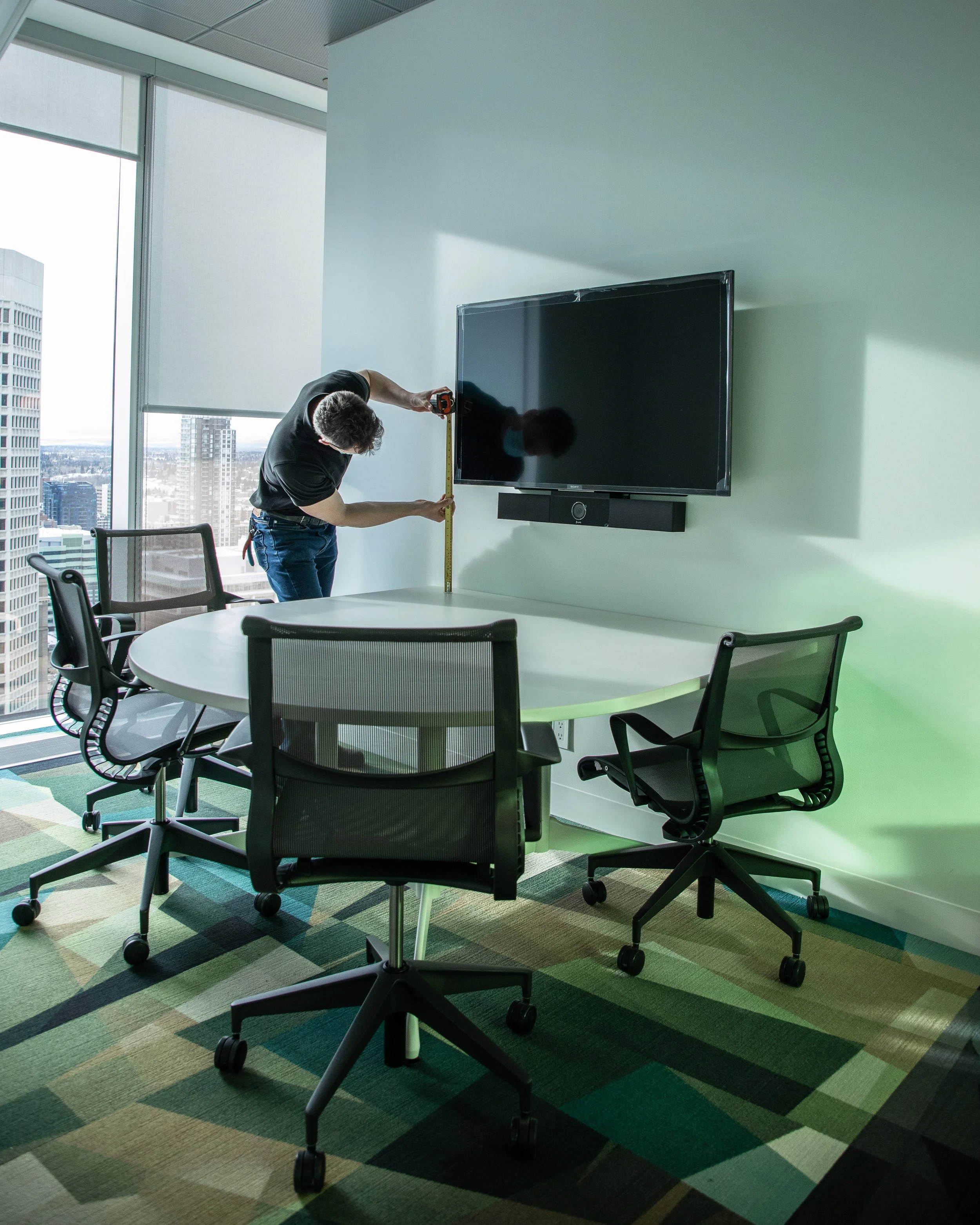
Commissioning is the final step in making sure the system performs as designed. This means testing the system in the actual space, fine tuning the audio coverage and levels, calibrating displays and cameras, testing video sources, and making sure the control system functions the way it’s supposed to.
Training and Ongoing Support
The project doesn't necessarily end when the equipment is installed. People need to know how to use the system, and the technology needs to be looked after once it's in place. Training gives staff the confidence to operate the system without having to call for help every time they need to start a presentation, change a source, or adjust the room.
Technology also changes over time. Equipment may need to be repaired, replaced, upgraded, or reconfigured, and an AV service team can help with troubleshooting, preventative maintenance, and ongoing support. Having an integrator familiar with the original system makes future changes easier because they already understand how it was designed and what is already in place.
AV Integrator vs. General Contractor
An AV integrator and a general contractor have very different roles but often work close together. A general contractor is responsible for the overall construction project, managing, scheduling, and communicating with other trades on a job site.
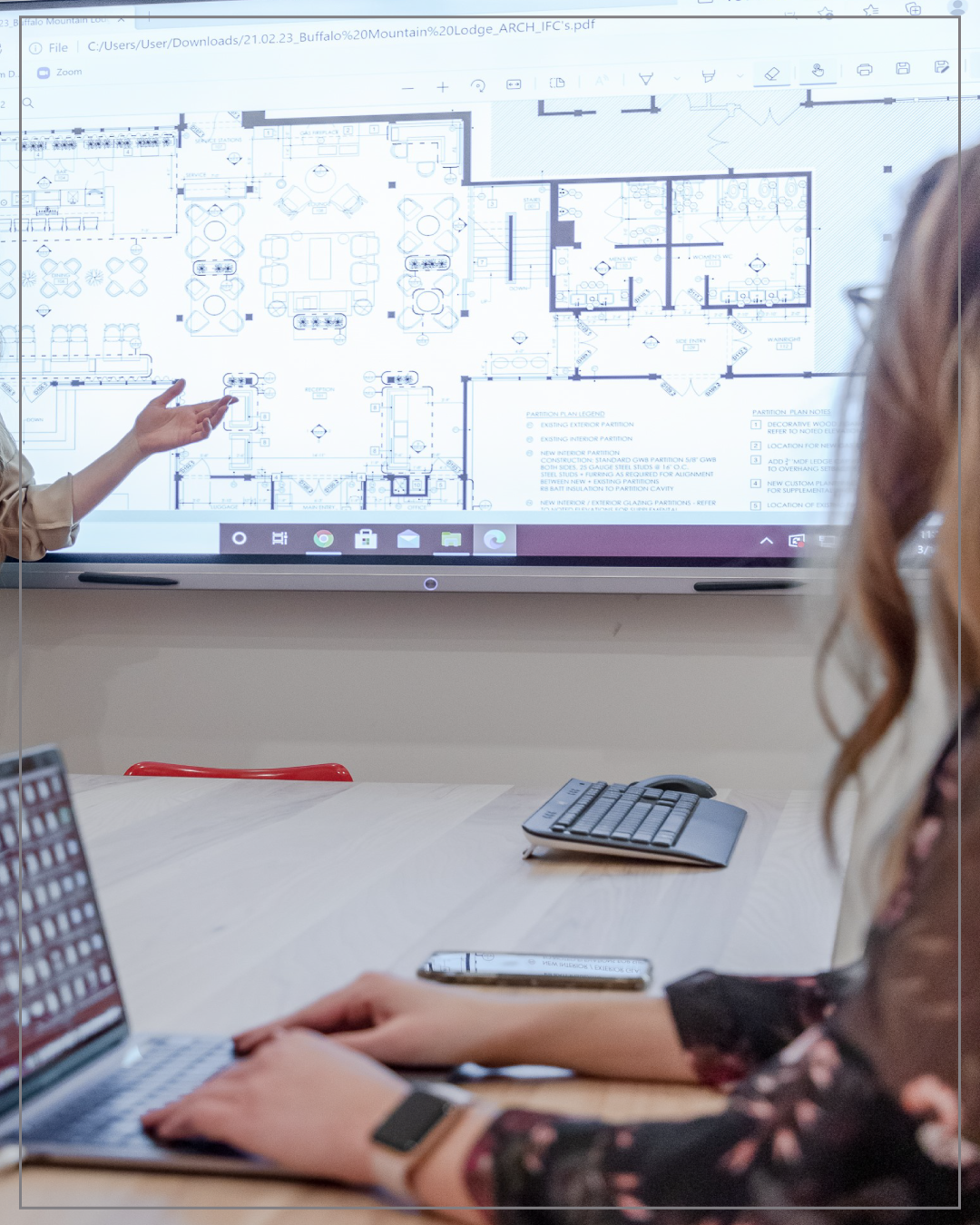
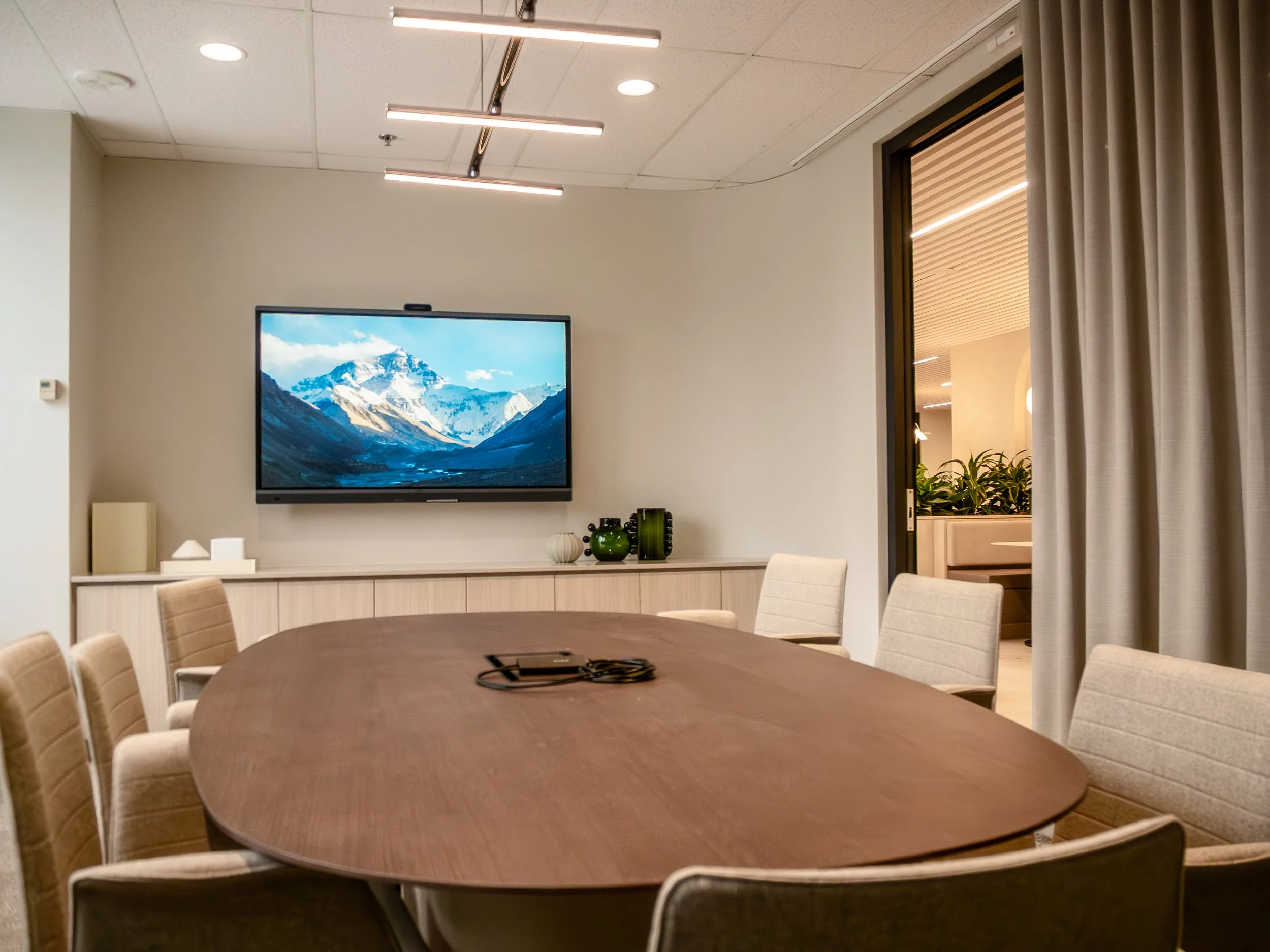
AV equipment requirements can affect ceilings, walls, electrical, data, millwork, acoustics, and room layouts, so coordination is especially important. A general contractor oversees the construction of a meeting room, and the AV integrator determines where displays, speakers, microphones, cameras, and control equipment need to be installed. Making sure the necessary infrastructure is in place is crucial for the success of the project.
Involving an AV integrator early on during a project is important. Planning these requirements before construction begins is much easier than trying to accommodate them afterward.
AV Integrator vs. AV Consultant
Although integrators can both design and install AV systems, they don’t always have to. AV consultants and integrators often work hand in hand: the consultant comes up with the system design, and the integrator brings the idea to life.
AV consultants are typically hired by a company to plan, design, and oversee audiovisual systems for buildings like offices, schools, and auditoriums. They work with the client to understand their exact requirements, determine system specifications, create blueprints, and ensure the end goal is reached.
The integrator takes that design and turns it into a functioning system. This includes sourcing equipment, installing it, programming the system, testing it, and making sure everything works together.
AV Integrator vs. IT Team
AV and IT systems often overlap, so it can be tempting to have an internal IT team take care of the AV integration. While IT teams are essential to the network and infrastructure that many AV systems rely on, AV technology requires its own specialized knowledge.
A professional AV integrator understands how factors like camera placement, microphone pickup, speaker coverage, room acoustics, displays, and lighting affect the overall user experience. While an IT team is often responsible for responding to and resolving service issues, good AV design can help prevent many of those issues from occurring in the first place. When a room is designed properly, people can be seen, heard, and understood without having to troubleshoot the technology every time they use it.
Having an AV integrator involved means the audiovisual system is designed, installed, and supported by professionals who specialize in the technology.
When Should You Bring in an AV Integrator?
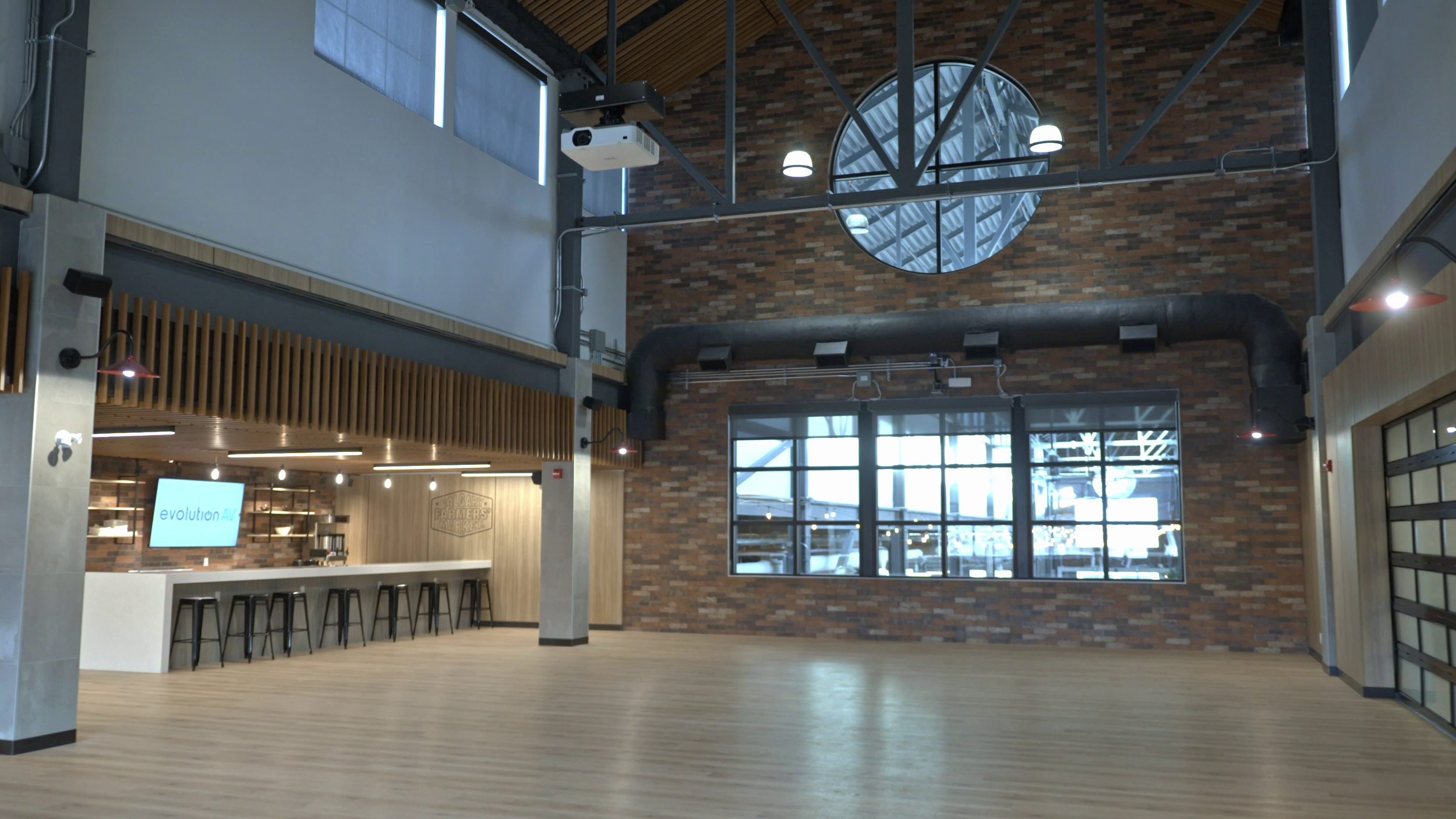
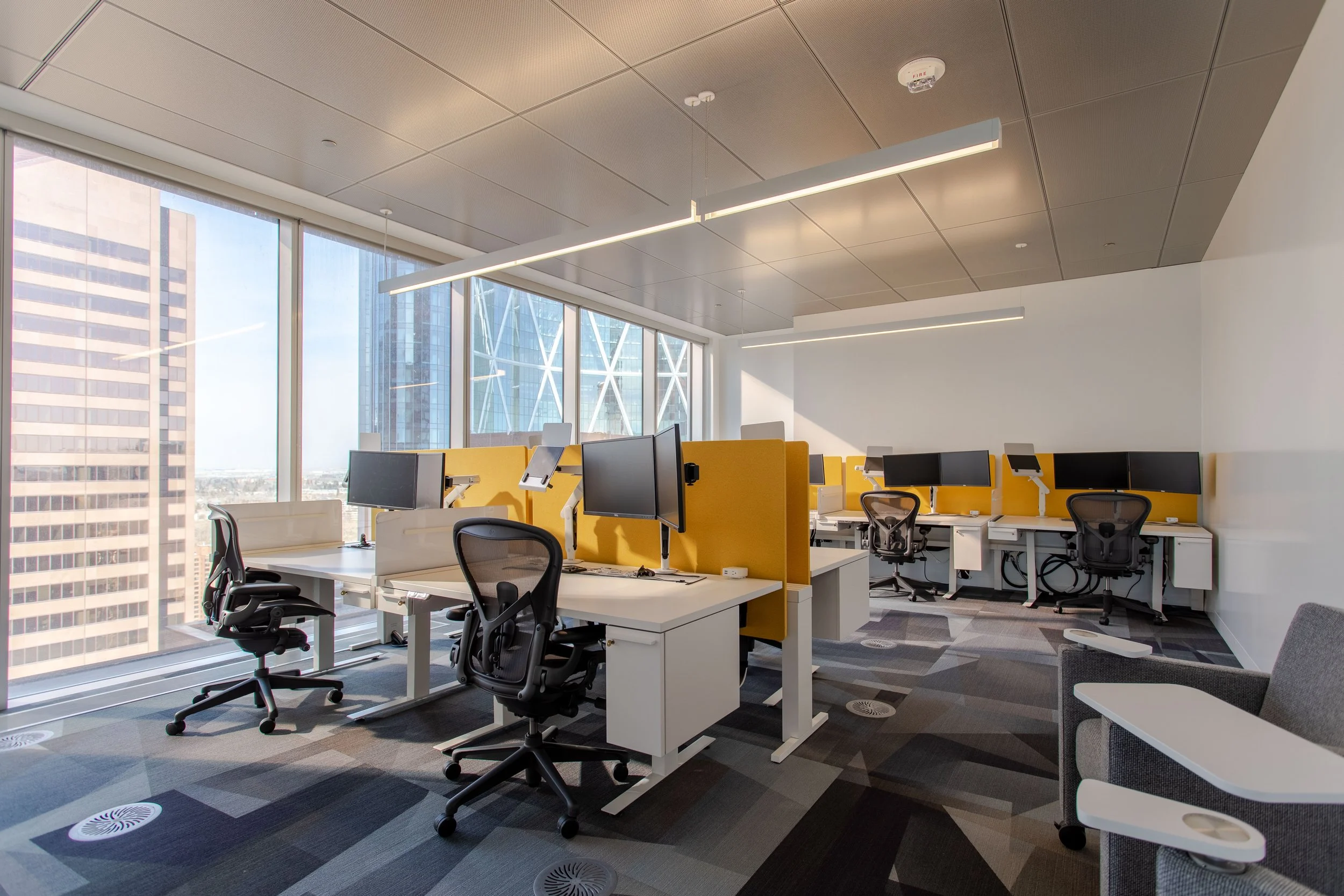
For new construction, the best time to involve an AV integrator is early in the project. AV requirements can have a bigger impact on a building than you might expect. Power and data locations, cable pathways, equipment rooms, ceiling conditions, display mounting, speaker placement, acoustics, lighting, and even furniture layouts can all affect how the finished AV system performs.
Getting the integrator involved early gives the project team time to plan for these requirements rather than trying to work around them later. It is much easier to account for a speaker in the ceiling, additional data cabling, or the right power location while the walls and ceilings are still being designed than it is after construction is complete. Early coordination can also help avoid unnecessary changes, added costs, and compromises to the final system.
However, new facilities aren’t the only spaces that can benefit from an integrator. Existing spaces often need just as much attention. Maybe a meeting room has outdated conferencing equipment, a sound system isn't providing consistent coverage, or users are constantly running into the same issues with a system that was never designed for how the room is being used today.
An integrator can assess the existing system, identify where the problems are coming from, and recommend whether equipment should be repaired, replaced, reconfigured, or completely redesigned. In some cases, a few targeted changes can make a significant difference.
Whether you're starting with a blank floor plan or an existing system that needs some help, involving an AV integrator early gives you the opportunity to address the technology as part of the space.
The Bottom Line
At Evolution AV, our approach is end to end. We can design, build, install, program, commission, and support the technology we put into a space. That means our clients have one team that understands the system from the initial design through installation and ongoing support.
Whether you're building a new facility, upgrading an existing space, or looking for a better solution to ongoing AV challenges, working with an experienced AV integrator can help ensure the technology is properly designed for the space, works together as intended, and is easy for people to use.
Because ultimately, the goal of a good AV system isn't to make the technology the focus. It's to make the space work better.






Frequently Asked Questions About AV Integrators
-
An AV integrator designs, installs, programs, and supports audiovisual systems. They bring together equipment such as displays, projectors, cameras, microphones, speakers, control systems, and the infrastructure needed to make them work as one complete solution.
-
An AV integrator can be involved throughout the entire lifecycle of an AV project, including system design, equipment selection, installation, programming, commissioning, user training, and ongoing support.
-
An AV consultant typically focuses on planning, system requirements, specifications, and design. An AV integrator turns those requirements into a functioning system through equipment procurement, installation, programming, commissioning, and support. Depending on the project, an integrator may also provide the design.
-
IT teams focus on areas such as networks, infrastructure, security, and connectivity, while AV integrators specialize in audiovisual technology and how it performs within a physical space. The two teams often work together, particularly on networked AV and video conferencing systems.
-
For new construction, an AV integrator should ideally be involved during the planning and design stages. This allows AV requirements such as power, data, cable pathways, equipment locations, acoustics, displays, and speakers to be incorporated before construction begins. Integrators can also help with existing spaces that need upgrades, troubleshooting, or system redesigns.